Interview with Flickerframe Shutter Festival Developers Part 1

Interview with Flickerframe Shutter Festival Developers
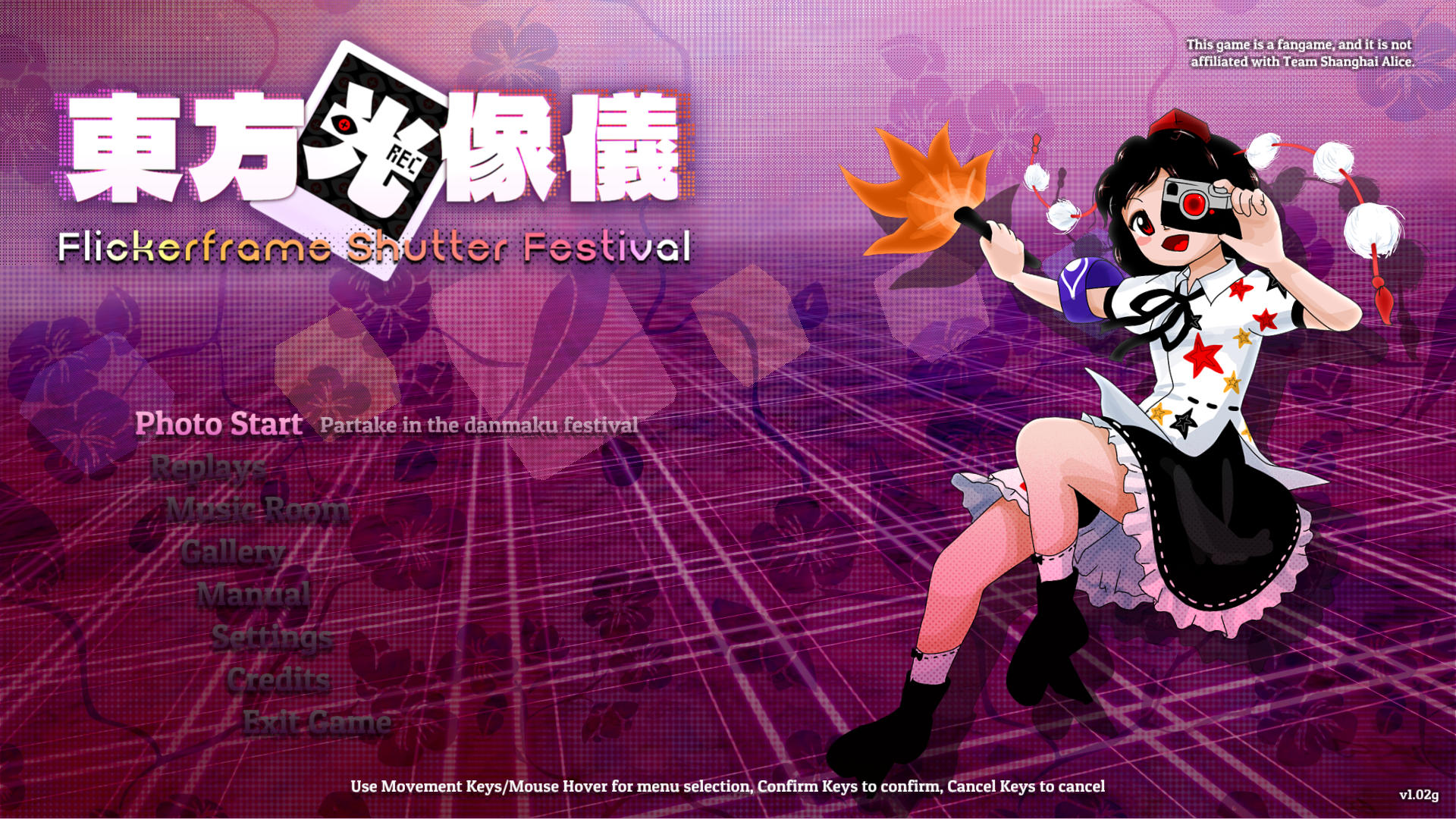
A grand celebration of fanmade-Touhou characters and one of the very few danmaku photography fangames, Flickerframe Shutter Festival is a rare breed of Touhou fanwork. We talked with the developers to learn how this incredible slice of Touhou fandom was made!
Getting to know our interviewees
Q: Please introduce yourselves, what is your name, what your role in the development of Flickerframe Shutter Festival is, and how you came to know about Touhou.
Ryann: Hello! My name is Ryann Thierry. Thank you very much for this opportunity, it is a big pleasure to talk a little bit about me, my team and my projects in such a cool format.
I am the main director behind FSF, handling team management, publishing, story writing, designing, programming and many other things involved in game development. I obviously couldn’t have done this without the help of very talented people, of course, especially Primary Dragon, who helped me with the game’s story and was responsible for all character illustrations, animations and an important chunk of the graphic design.
I got to know Touhou in 2015, when I saw Cirno as an easter egg in another game called Yandere Simulator. Her official theme played alongside her portrayal there, and that got me heavily interested in finding out where she came from. I got Embodiment of Scarlet Devil and found it very fun to play, and that’s what got me hooked on the series!
-Ah, are you a big fan of the gameplay then?
Ryann: Yeah! I had absolutely no experience with shmup games before, but it really fascinated me, I could say. I’m enough of a fan to be able to play most games on Hard to Lunatic mode, and it’s probably not a big surprise to see that most of my games are in this genre. Nowadays, though, I’m definitely more interested in the type of gameplay Touhou fangames offer rather than official ZUN content.
-Could you give us some examples of your favourite fangames, as well as tell us what makes them your favourite?
Ryann: Of course, I’d love to.
To start off, my favorite fangame, at least for a good amount of time by now, is 東方桃源宮 ~ Riverbed Soul Saver. Usually, I tend to enjoy the story writing, character design and music more in fangames, but this one was the first game that actively made me look out for its gameplay first. It feels incredibly satisfying to play, and the accompanying settings, music themes and characters deeply enriches it. It’s definitely a game I’d like to deeply reference and base a future project of mine on, so I’m looking forward to that, perhaps in a way to honour its legacy.
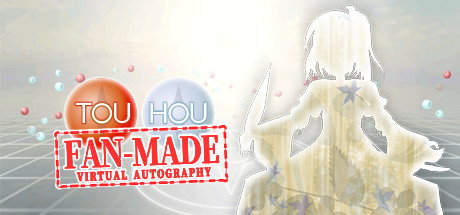
I definitely want to also mention 東方覚醒珠(※二次創作) ~ Fan-made Virtual Autography, a game that follows official Touhou standards as much as it deviates from them. It’s an incredibly unique game that very much showed me how you can still make something vastly different from official material that still feels like it has a deep Touhou identity, as much as it has an original take on so many aspects of the genre.
Benji: My name is Benji Tunez, or just Benji. I am the lead musician and sound designer for FSF. I came to learn about Touhou long ago when my brother one day started playing EoSD on his crummy old laptop and that piqued my interest. I got into it during high school and conveniently I was also into making music at the same time. You see where this is going?
-Ah, so your interest in making music coinciding with discovering Touhou led to an increased appreciation of both, then?
Benji: Yes it did. I was finding myself during that period, I just didn’t expect both of those to intersect, but here we are!
-What particular aspect of Touhou made you like the series?
Benji: The bravery of ZUN to take something as simple as Shintoism further beyond the shrine and into different places. Worldbuilding and aesthetics, and especially the rich color of the music he made over the years has always captivated me.
-What part of the worldbuilding do you especially like?
Benji: Makai, both Hells being a thing and becoming their own places with their own customs, the entirety of the Moon being this Chinese Mythos influenced nation of stuck-ups. The only other place I’ve seen this kind of worldbuilding is in J.R.R Tolkien’s work! It inspires me for my own projects, considering all this worldbuilding is all for games of magic girls shooting each other!
-Is Makai your favourite location then?
Benji: Yes and no… I have never completed a run of UFO- But Byakuren does come from Makai so it’s an even 50/50 for me.
Q: Who are your favourite characters? What makes them your favourite?
Ryann: My favorite characters… Well, my absolute favorite is probably Sanae Kochiya. I really like her personality and way of handling incidents. I enjoy her drive, her interest in learning things, her loyalty… I’m not sure exactly how to explain this, but she just resonates with me, I suppose. Her design speaks to me.
Close to her, though, is more of a standard pick, Reimu and Marisa. I think those two characters, when used in fanworks, serve as very easy entries into fan-made stories. Everyone knows their attitude. Everyone knows the kind of perspective they bring into narratives, so it’s easier for you to understand the story someone wants to tell by following it with someone you’re familiar with.
-You resonate with Sanae, eh? Do you also have an affinity for Retro things, then?
Ryann: LMAO? I guess you could say so? I’m not very big on retro hardware, but I think it does make sense to say I’m a very nostalgic person, so I’m always looking back on the past and things I used to like, and still do to this day.
Benji: Mamizou and Marisa. To me they are semi carefree characters and cool. That and Mamizou fluffy-
-Marisa is quite a popular choice in terms of being people’s favourite character. Why do you think that is?
Benji: Pardon my French, she’s badass. I think also she does have a bit of tomboy energy to her, and from my own research she has apparently a more rural accent (I could be wrong though) which makes her stand out in front of the rest of the characters who lean more towards elegant or old-fashioned.
Q: How did you get into game development / composing music?
Ryann: Tough question. It feels like I was always into that, like I was born with it.
But perhaps I could say I mostly started getting really into it when I was around 9 or 10? Before that, I used to watch content related to that, I believe, but never had tried for myself. But I always had wanted to.
I started making small projects using RPG Maker VX Ace at the time, but they never got finished and were pretty lame, looking back on it. I don’t think 9 year olds are very good at writing drama, lmfao.
As for Touhou-specific game development, I started in 2017, when I was 13, making small games that actually were released this time. Shmups, of course. 1-stage long generally.
Nowadays, I’m in my last semester getting a Bachelor’s in Game Design. I guess it really is an official career now, lol.
-You’ve been releasing games since you were 13? Were they on Danmakufu?
Ryann: Yep, since 13! They were very simple though, so nothing compared to what I do nowadays, of course.
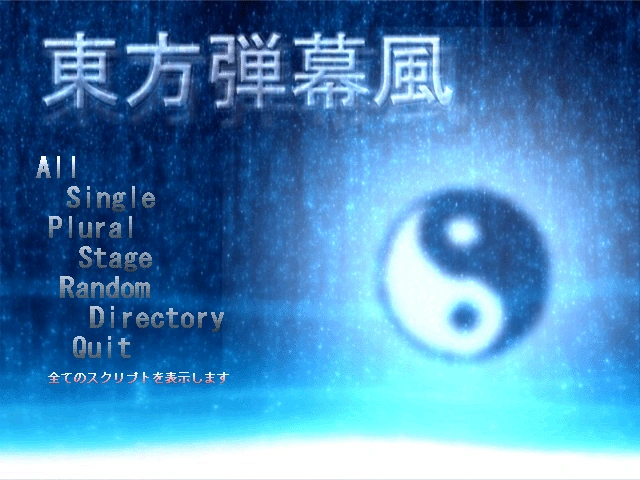
And no, I have used Danmakufu in the past before (such as in 東方大同物 ~ Ecstatic and Expressive Allies), but it’s not an engine I’m very familiar with. My main engine of use, in Touhou-type games, is LuaSTG.
-That’s quite an impressive résumé then.
Benji: I originally started in marching and symphonic band back in Middle school. Now this is the part where I say I played trumpet and that’s why I use Zunpets all the time; but I played trombone! I got very good at the instrument, but the entire time it felt like I was forced into it by the world and my lack of money to get an instrument I really wanted.
Before I entered high school, I learned Baritone, Tuba, Alto Sax, and yes, a bit of Trumpet. When I learned how to compose my own music, it opened me to a world where I can further learn more and not be restricted to one instrument. So in a way, composing gives me my sense of control and freedom to find myself.
-All woodwind/brass instruments, I suppose you have a particular affinity for them?
Benji: I understand how they work and how to play them properly. I am also hispanic with a Cuban father and an Ecuadorian mother, so the brass section is very important to me in more ways than one. I grew up with an abundance of Latin Jazz and music featuring Brass. Lately I’ve been digging Gloria Estefan and the Miami SoundMachine!
-Hmn, I’m not too familiar with Cuban or Ecuadorian culture, do brass instruments have significant history in them?
Benji: All you need to know is if there’s Latinos, there’s some Brass. Latin music is a great example of a potluck of many cultures, Native cultures from different parts of South America had their own flutes and unique instruments, places like Cuba also incorporate Afro-inspirations through drums becoming part of their sound and genres (Salsa), the guitar, originally an Ottoman instrument, is taken by the Spaniards, then it managed to get its way to the hearts of thousands of people in South America, where now you would be forgiven for mistaking it for a South American instrument! And the Brass, some of those Brass instruments are called “The voice of God” for their thunderous presences.
I know you asked about Brass, but almost every instrument has importance. What was originally drums and a few flutes being used for religious rituals became entire ensembles from around the world playing with the passion to support it!
The Design of Flickerframe Shutter Festival
-Now that we’ve given the readers a chance to familiarize themselves with you, let’s talk about the development of Flickerframe Shutter Festival.
Q: There are many shoot ‘em up Touhou fangames, but very few Shoot the Bullet-style danmaku photography fangames. What made you want to make a photography based fangame specifically?
Ryann: You’re right. When searching for games that followed this style, I could barely find any. The most famous, of course, トライフォーカサー ~ Outside the Traditional World (Trifocuser), I had already played and was deeply familiar with, but I got to know a few others like 東方無許可の時空 ~ Nothingness in the Void and other attempts at replicating the format in some Chinese Touhou game development forums.
However, as it can probably be seen from my game publishing history, I tend to make fangames that follow the style of the spinoffs of the Touhou franchise.
For example:
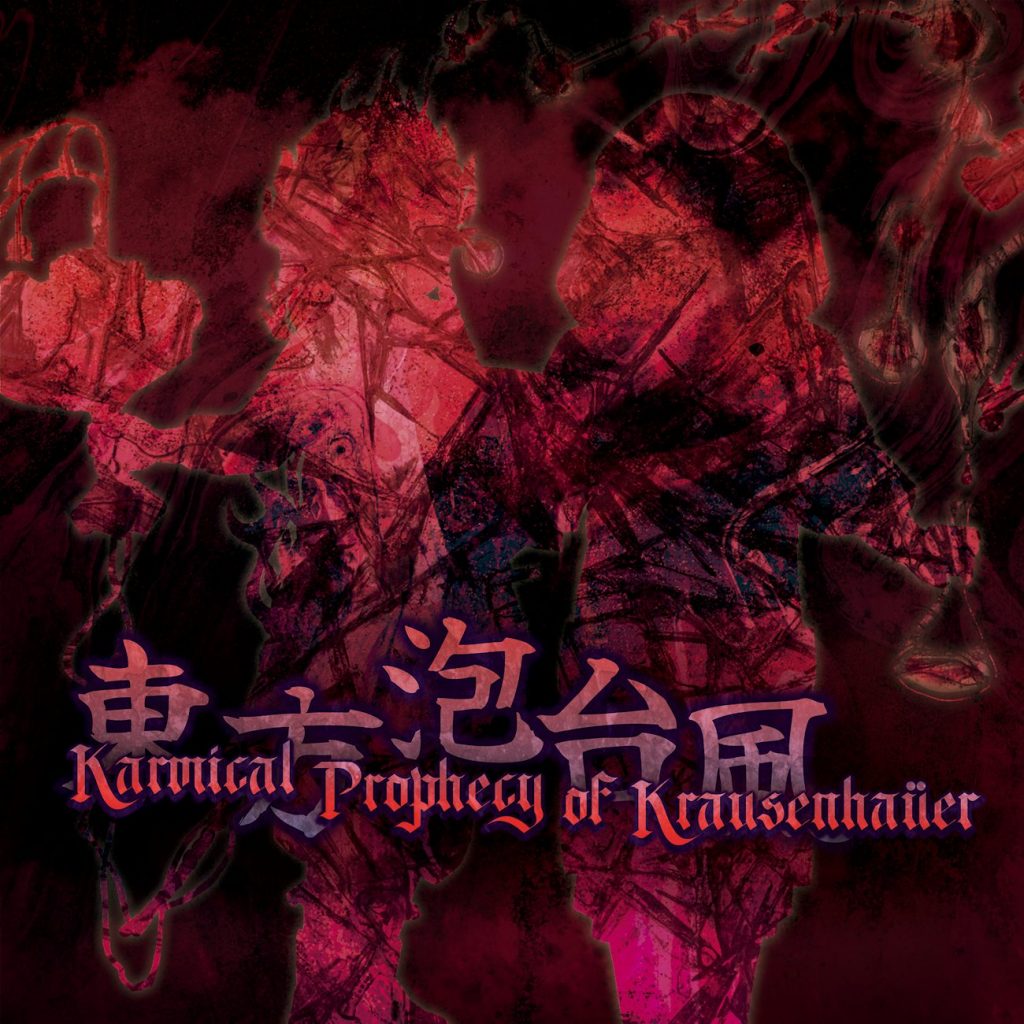
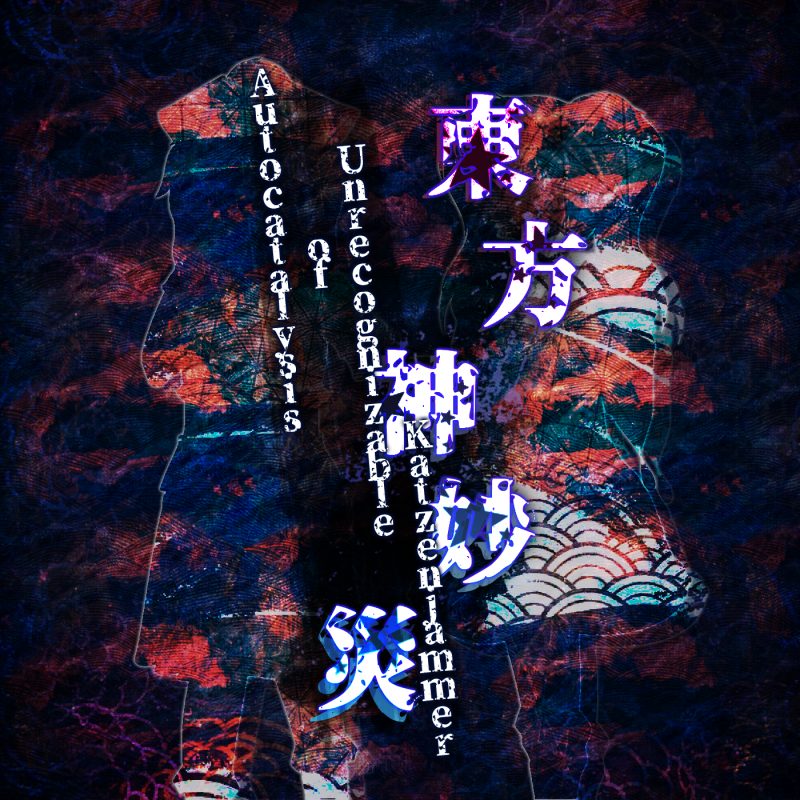
・My 弾幕アマノジャク ~ Impossible Spell Card equivalent(s): 東方神妙災 ~ Autocatalysis of Unrecognizable Katzenjammer and 東方泡台風 ~ Karmical Prophecy of Krausenhaüer
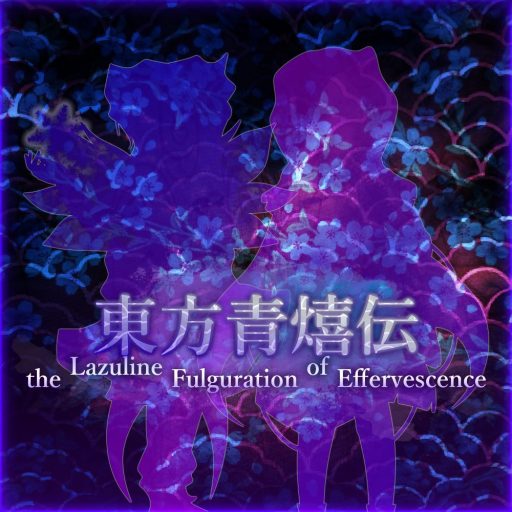
・My 妖精大戦争 ~ 東方三月精 (Fairy Wars) equivalent: 東方青熺伝 ~ the Lazuline Fulguration of Effervescence
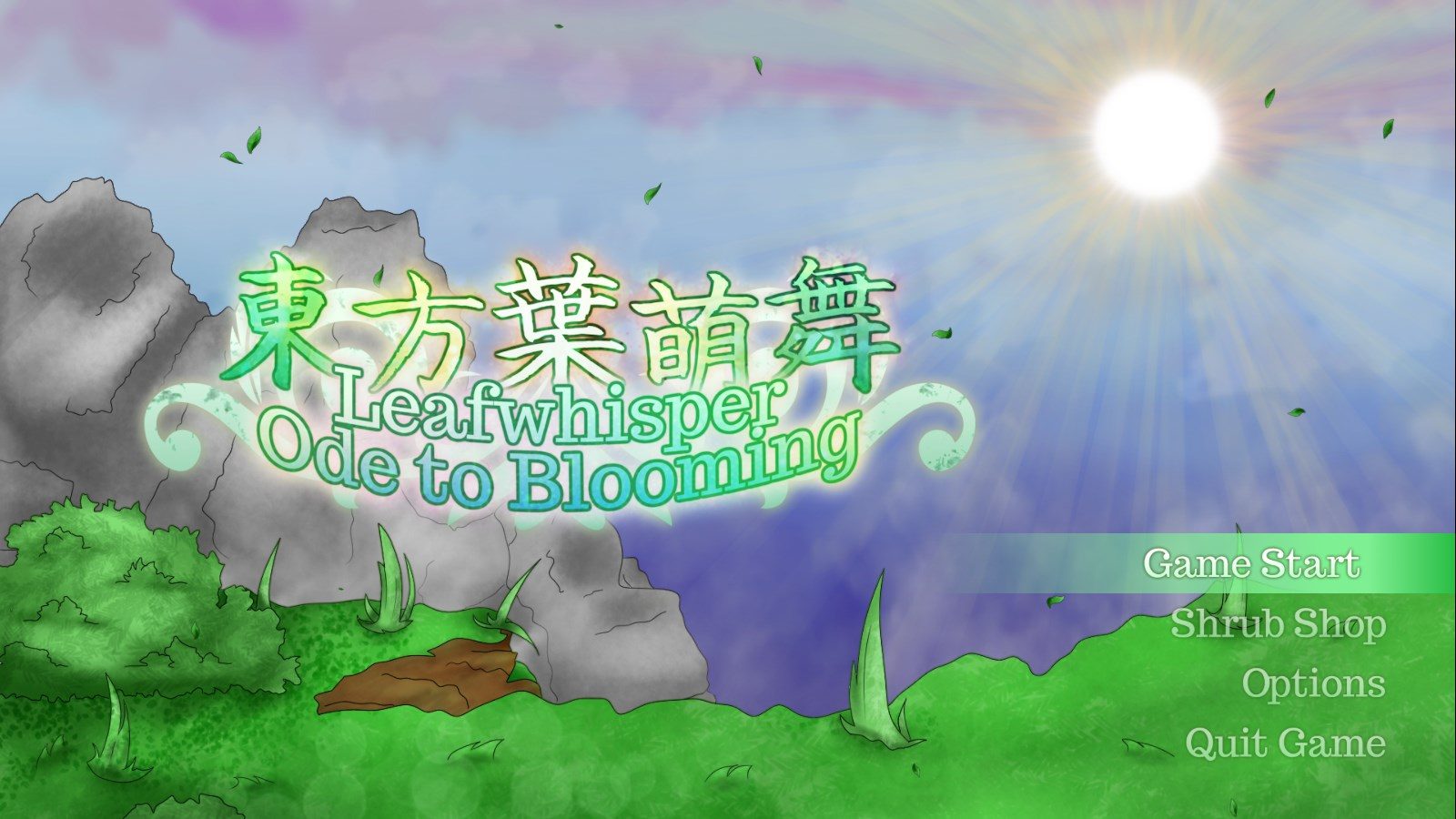
・My バレットフィリア達の闇市場 〜 100th Black Market equivalent: 東方葉萌舞 ~ Leafwhisper Ode to Blooming
So it was only natural that the next project I’d be creating would be one of the two remaining ZUN “spinoffs”. That is, a photography game. The remaining one… we’ll see in the future.
-Hmn? Impossible Spell Card, Fairy Wars, 100th Black Market, and Photography. Are we still missing one ZUN spin-off?
Ryann: They’re games that are considered “integer number” or mainline games, but they very much differ between the other entries in the series. The 9th and 19th entry, specifically. So, to me, I interpret them as kind of a special type of spinoff.
-Those two have a gameplay style that does lend themselves well to having more than the usual number of characters.
Ryann: Mhm!
-Speaking of.
Q: Flickerframe Shutter Festival also features numerous fanmade Touhou characters from various Touhou fangames. What did the process of including them involve? Were there any difficulties in choosing or adding those fanmade characters?
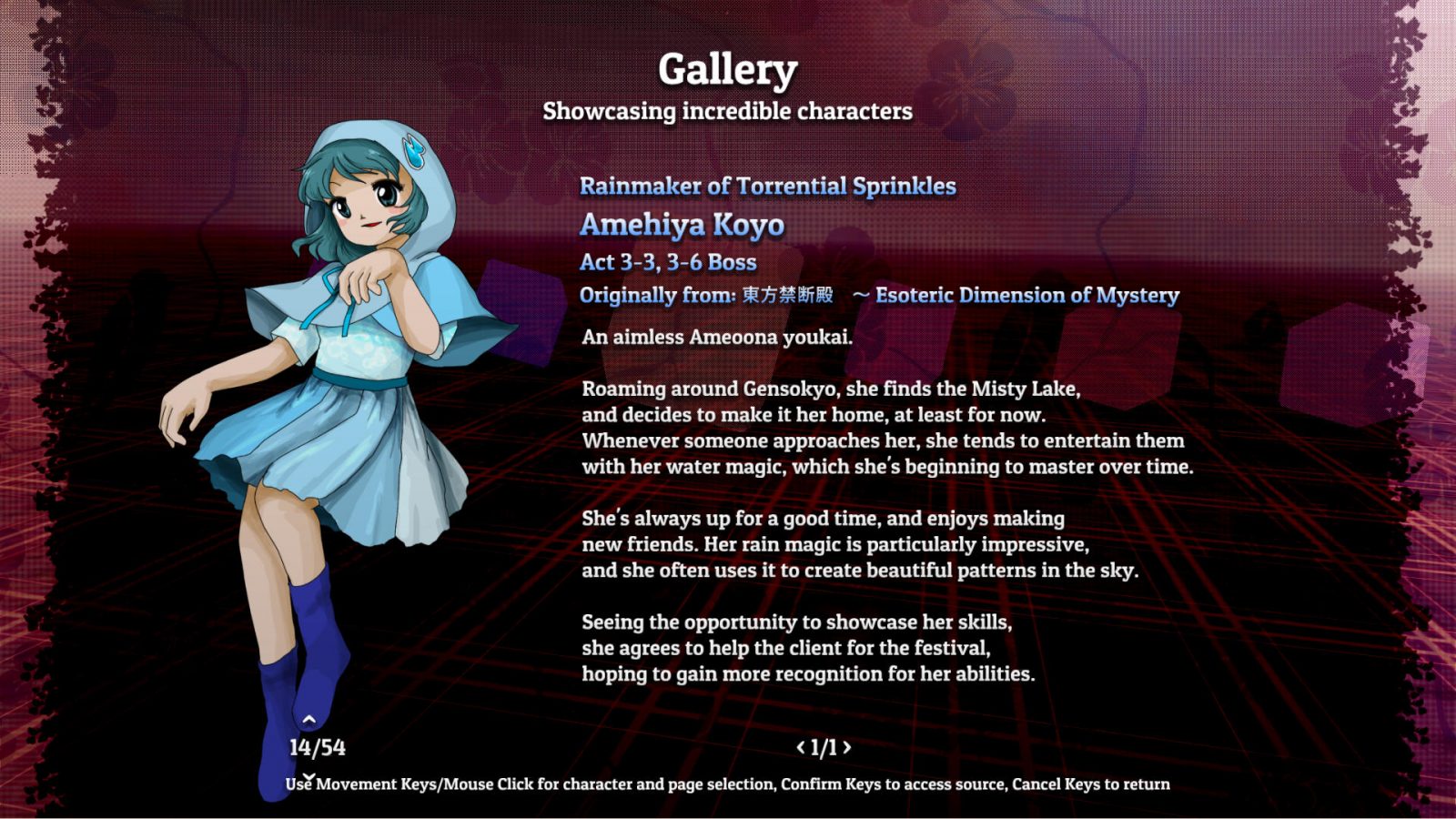
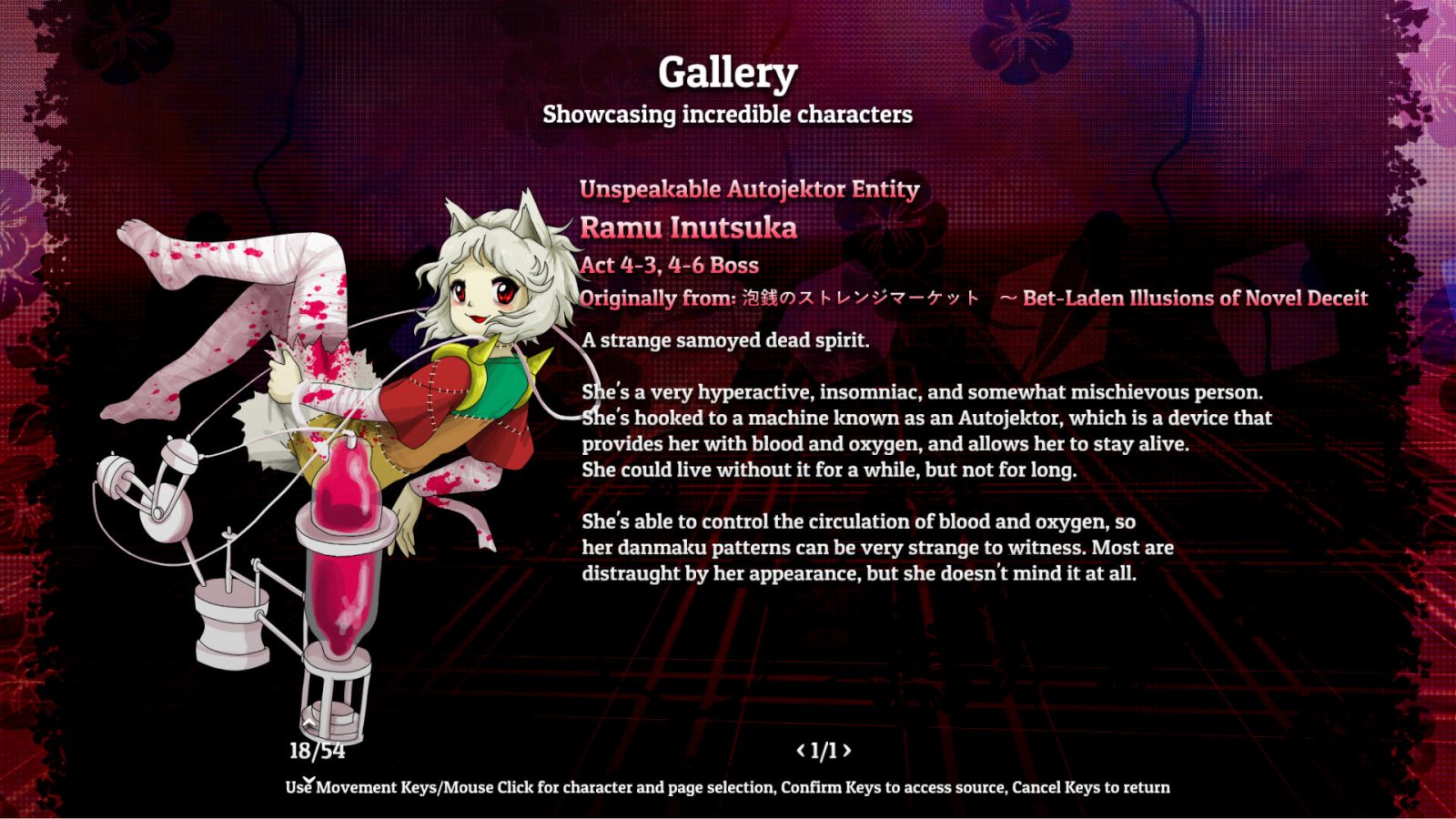
Ryann: I could honestly spend the whole day talking just about the character selection in FSF. But, let me try keeping it simple.
In the game previously released to that, KPoK, I already had the presence of fanmade characters from other authors, but I couldn’t fit too many of them while keeping the story concise. As it is a game in smaller scope than FSF, we kept the fanmade character appearances mostly to the “extra stage” of that game, without having relation to the main story, in the end. But it was something that I wanted to dive deeply into.
So, for FSF, the story was made from the start to have this in mind, instead of trying to fit characters into an already existing narrative.
In the development time of 6-7 months, it took about 3 months to get all characters decided and permitted. Fujiwara no Ayane, though, from 東方霊守祀 ~ Consciousness’ Unity of Opposites, was an exception, as she was added after the game was officially announced, by intense request from the original authors.
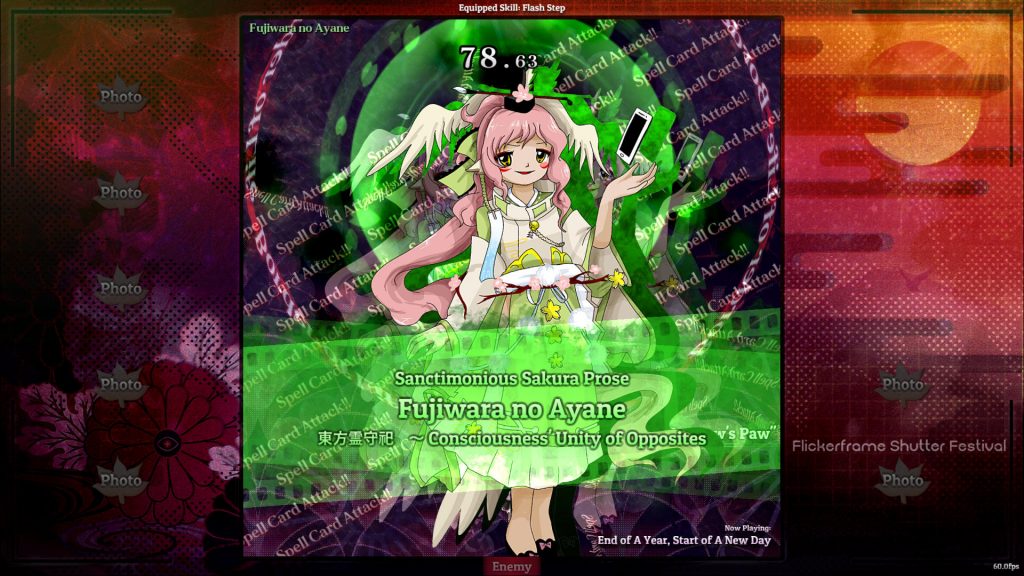
Most characters were decided based on me asking the team “who would you like to see in this game?”, and later on trying to fit all of these characters into categories. So, for Act 3, we need water themed characters. For Act 9, we need “crazy/evil” characters.
It was, however, very difficult to fit and find some characters to put into these categories, particularly because we faced a lot of rejection trying to get permission from some authors, so we had to work around that. It went well in the end, though, thankfully.
-So you actually ended up contacting and getting permission from the creators of every single character in the game, then? That must’ve been quite the undertaking, wasn’t it?
Ryann: Yes, but I absolutely had to do that. It would be very messed up if I included a character in the game without warning the original author, especially since it is a paid game. So I didn’t want anyone knocking on my door for that, lmao.
Surprising as it may be, for some characters from projects released this year or last year, I couldn’t find contact info on those who were responsible for them, but I was able to get a character from a 2012 fangame, Luminous Dream. So that was funny.
Q: Aside from the fanmade character, the game also includes 2 original characters in Erita Hatachi and Masachiyo Kurama, as well as 2 what-if characters in Satsuki Rin and Layla Prismriver, what was the thought process behind their creation/inclusion?
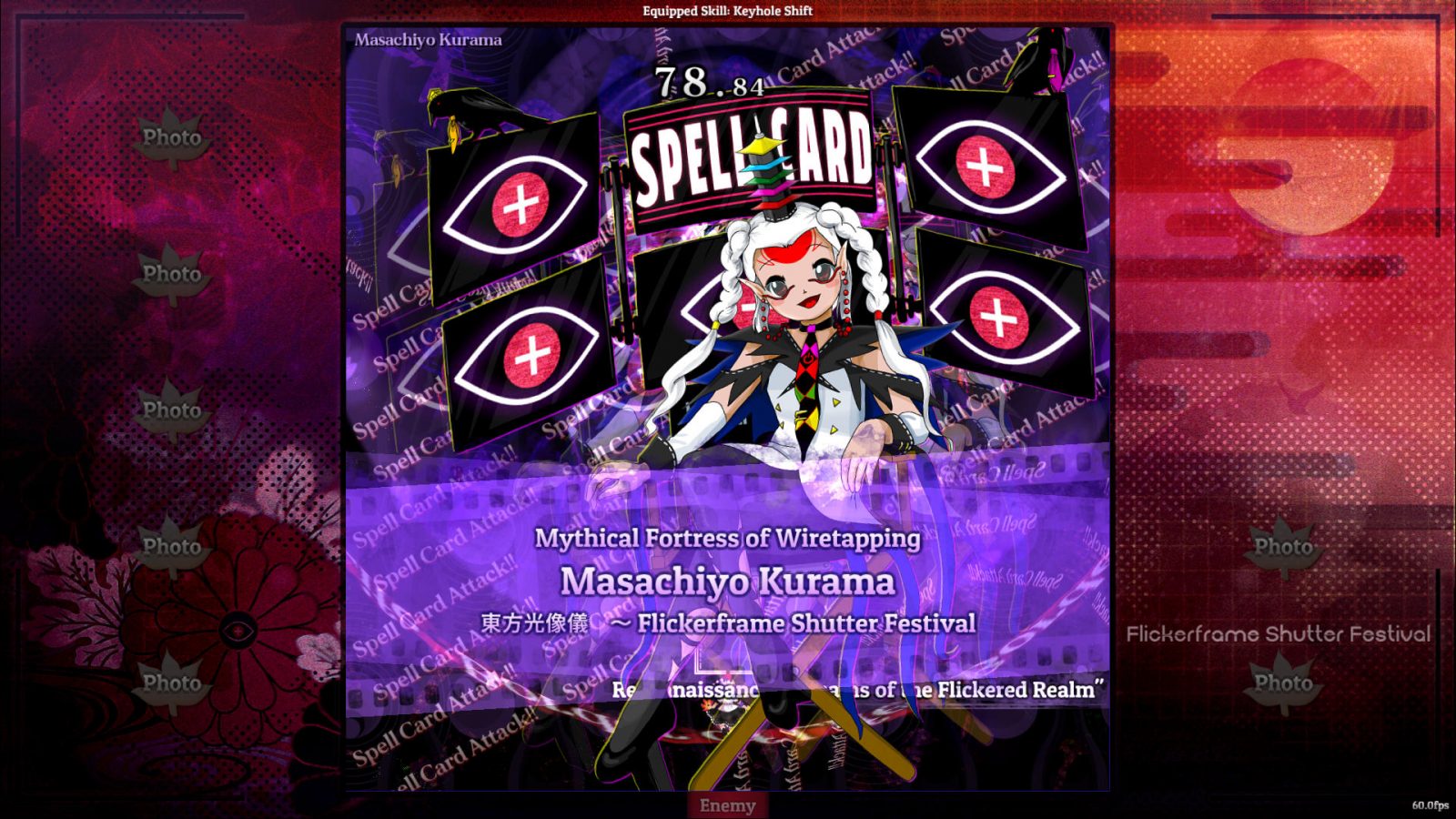
Ryann: Erita and Masachiyo’s profiles and designs were made by the team’s artist, Primary Dragon, with revisions by me. The character idea (a final boss with multiple screens) was already a concept back when we were creating KPoK, and since we were very fond of it, we had decided we’d turn the concept into reality.
However, most of the foundation was done heavily into the late-stage of development. Masachiyo and Erita were some of the last characters to be produced for the game. The development flow of FSF consisted primarily of fitting the fanmade characters into these category boxes, and we only really figured out where we wanted to go with the story by the end of it.
When the game was announced, only the content up to act 6 (out of 12) was finalized, and act 7 was in its infancy. We pretty much just came up with the idea of where to go from there while producing the announcement trailers.
As for Rin and Layla, Rin used to be my favorite Touhou character before, and when someone suggested she be used in the “musical act” of the game, I thought it was a pretty cool idea. And then Layla was very much also a “what if” scenario. One day we didn’t even remember her existence, and the next she was in the game.
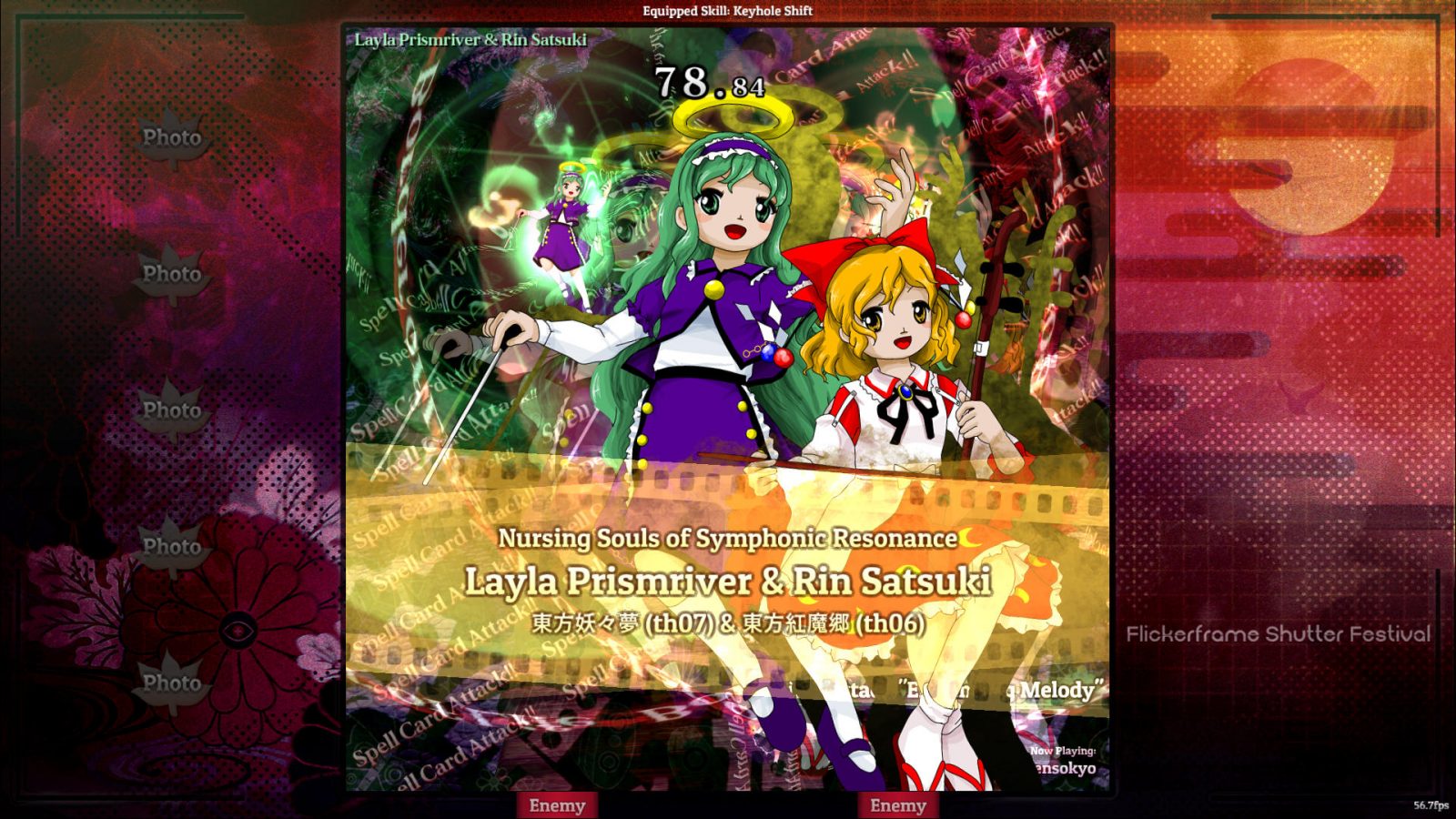
FSF differs from a lot of other fangames in the sense of it really being the definition of “scope creep”, in the way of just doing things because they sound cool regardless of difficulty, but that it fell onto the lap of people who were insanely engaged with it. It honestly wasn’t planned to be as big as it is. I was actually surprised when I discovered my own game had 52 characters. It’s crazy to say.
-It seems that quite a lot of the development was focused on specifically featuring as many fan-characters as possible, as well as justifying their inclusion in the game, then?
Ryann: Exactly. Pretty imprudent, especially for a commercial game, but that part was also only solidified after we had already started developing it. We just wanted to make authors feel represented in having their works being recognised as cool enough to be featured in a big fangame character compendium, if that makes any sense.
-It does.
The Spell Cards of Flickerframe Shutter Festival
Q: How did you come up with the spell cards used by those fanmade characters? Were any of their spell cards inspired by the game they came from?
Ryann: Creating spell cards, regardless of the character, ends up being a difficult task. As I mentioned before, that is not something I actively look out for when playing fangames, but I know the majority of people do have an interest in spell card designs. So I tried my best making cards that aren’t just copy-pasted from the original material, but something unique that still made them feel authentic to the character that owned it.
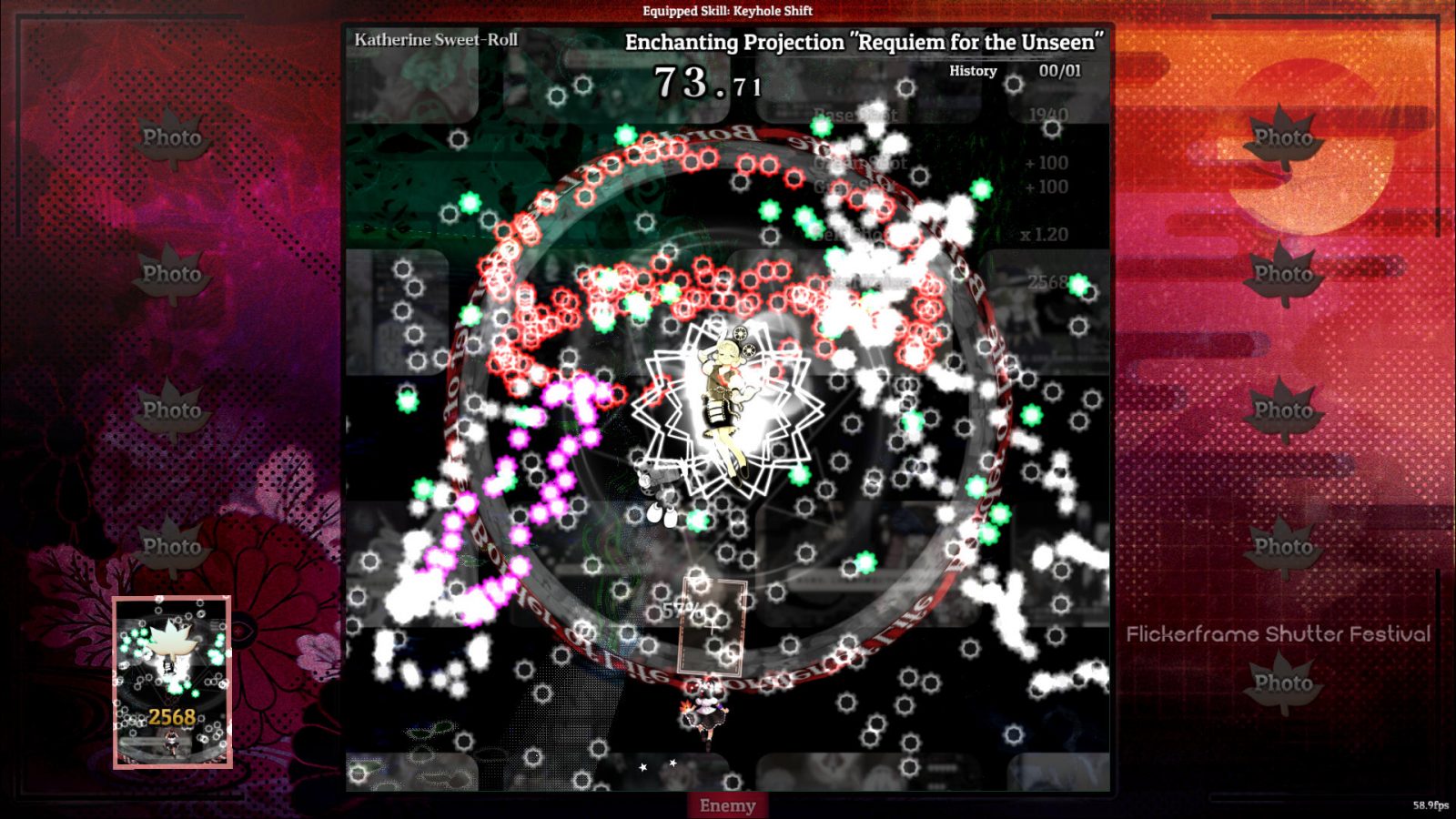
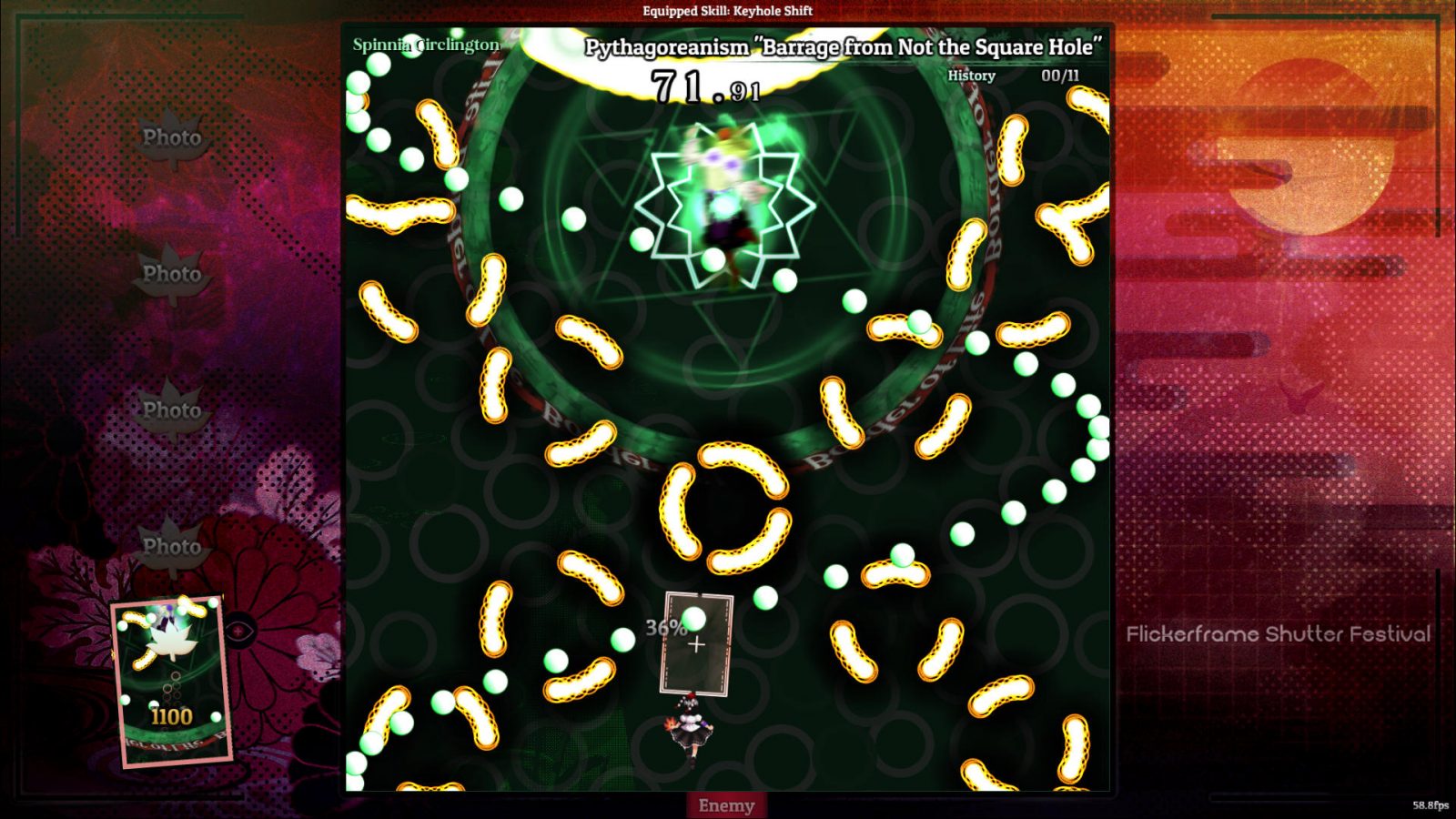
But, of course, not all characters in FSF come from games. There are characters from music albums, fangame concepts and other types of fan media. For those characters, I didn’t have much of a reference in terms of danmaku design, so I had to come up with new, original aspects to those characters. From what I can tell, though, the authors have found it satisfying, so I’m glad to know it worked out in the end.
-Oh, did you also show the spell cards to the original creators for their approval? Did you also go through the same amount of trouble for their profile description?
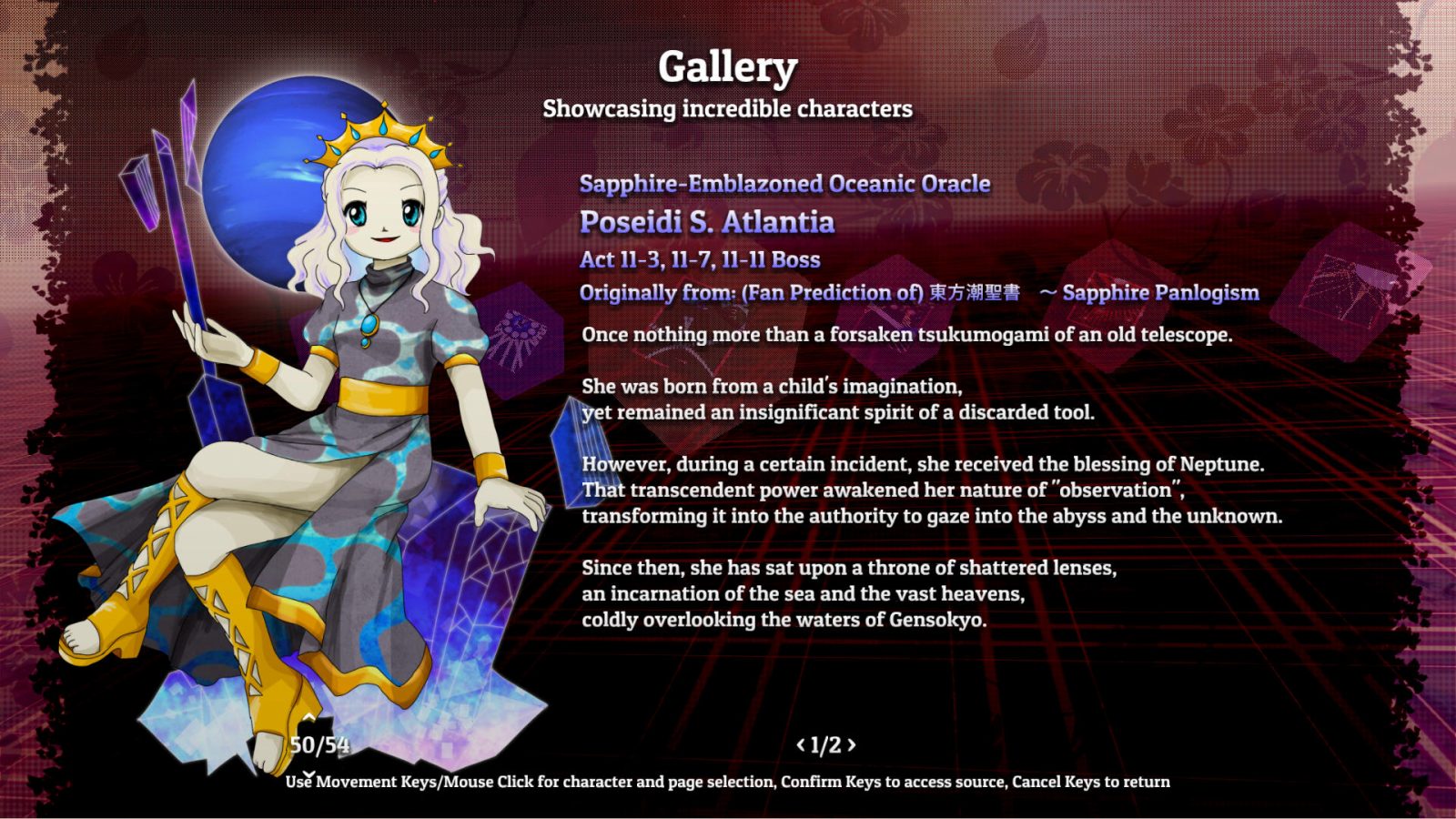
Ryann: Not to all of them. I wasn’t very consistent with the way I showed progress to those creators. Considering there were so many people, not all of them got to see in-development content, mostly people I had already talked to before or that I was friends with. Most authors did see their character’s portrait, though, before release. The only instances of a character being fully shown to their original creator (including their profile), I believe was with Poseidi S. Atlantia, because I worked alongside their author, Otohime_TW on Twitter (X), to improve their profile in the game, as well as Shousei and Agana, with Spectral Nexus.
Q: The final boss features some of the most difficult and also most creative spell cards in the game, how difficult was it to design and balance them? Did you intend to have it be at a much higher level compared to everything that came before?
Ryann: Surprisingly, they were one of the easiest spell cards to design for me. I had a very clear vision of what I wanted to represent with Masachiyo, and I think I did exactly what I had wanted. Balancing wise, it felt very straightforward as well.
Not all cards are very much of a higher level, in reality. At first glance, they may look very difficult, but Masachiyo is all about tricking you. If you understand the gimmick of the card, they become easier than some cards in Act 10 or 11. I believe the hardest card definitely is the final one, and the one you must clear in order to reach the ending of the game. I definitely wanted to make it feel intense, so asking the player to take 10 photos while dodging a wall of fast, threatening danmaku was only natural to happen. I’m very proud of it.
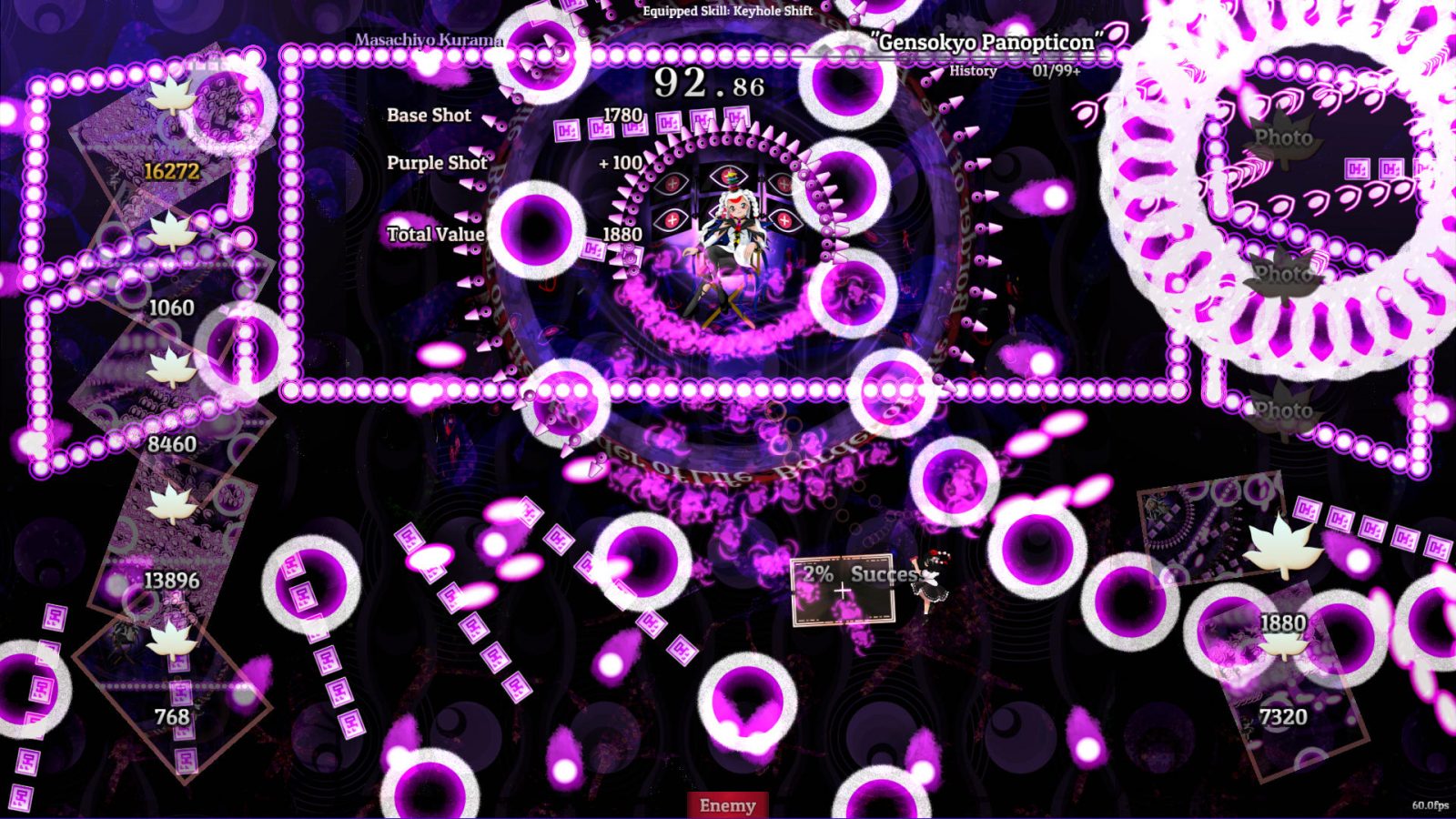
-That’s the spell card that removes the “walls” and allows you to move around more, and also allows the boss to fire more bullets than usual, right?
Ryann: Yep! It was so fun to do that!
Q: Which spell card did you and your crew have the most difficulty in designing? Which spell card were you most proud of?
Ryann: You’ve reached a good point. I designed around 90% of the spell cards in the game, but I did have help from my friend Doremy who made Prifma’s last card, and my friend Loann Fox, who designed Nusakoro’s cards and the first two Prifma cards. The other programmer in the game, Zino Lath, also did Omote’s first card and Hikawa’s last card.
I believe the hardest spell cards to design, for me, were those that involved heavy math usage. For example, Shousei and Agana’s first card, with the squiggly lasers (manually positioning every point in the bent laser), Shousei and Agana’s 2nd card (executing a 3D danmaku sphere in a 2D space) and Katherine’s final card (with the Touhou fan character drawings)
The spell card I’m most proud of… Probably Masachiyo’s last card. It’s simple, but very effective.
-Is that also your favourite spellcard in the game, then? My own personal favourite amongst Masachiyo’s Spellcard is “Legendary Youkai of the Flickerwhispers”. That one actually shows the photos you’ve taken over the course of the game, right?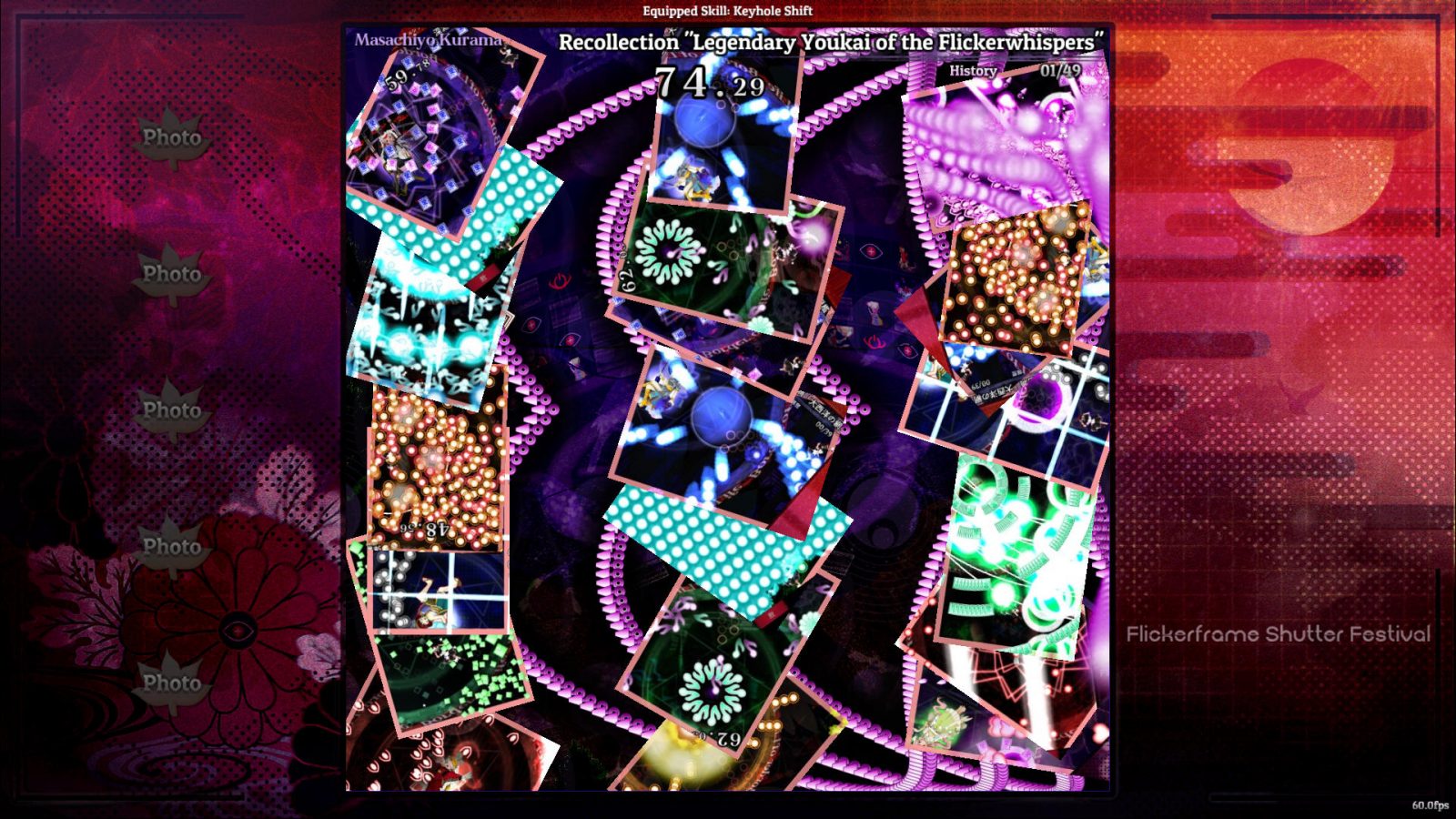
Ryann: I’d say so, yeah! There are other more novel ones, but since that was the last card I did for the game, it really felt like a big “Wow, it’s over!” moment for me, so I’m a little bit emotionally attached to it.
And yes, that’s the one! It was honestly so fun playing around with these types of elements. Other characters in the game did mess around with these meta-like ideas, but I went all in with Masachiyo. It suits her a lot.
-Her spell cards definitely play very well with her Big Brother Is Watching concept.
I’m glad to hear that.
The Music of Flickerframe Shutter Festival
Q: What was the process of creating the soundtrack? Was each act completed first and then you composed based on the act? Or did you compose each track in a vacuum?
Benji: Conveniently, Ryann had almost all the acts except 11-12 ready to play/watch by the time I joined the team. My process was to listen to reference tracks Ryann provided for me and then create piano sketches of what I wanted. Sometimes I’d start with the drums due to how Pop/Hip-Hop inspired this OST was compared to previous works. Almost everyday during the creation of this game I was in contact with both Ryann and the team for feedback! I thought I was being too annoying about my frequency but as it turned out, they loved my music!
Due to how unique I wanted this soundtrack to be, I intentionally incorporated more unorthodox methods to my composing: Non-Touhou instrumentations, styles ZUN has never touched before, I even made three songs on Mac instead of my go-to PC!
-Oh, how did the change from Mac to PC influence the music?
Benji: I felt that on Mac (using the Mac exclusive Logic Pro), it felt TOO easy to mix right but harder to get faster pace/more elaborate compositions. On PC, it felt the opposite, it was easy to compose with FL’s tools but harder to mix it properly. Logic Pro is a soundshaping tool whereas FL is a Beat making tool.
-Which of the 3 songs did you make on Mac? From that description, it sounds like “To Rival Your Shooting Skill” and “Long Day Gig” are among them, since they’re slower in pace compared to other songs in the game.
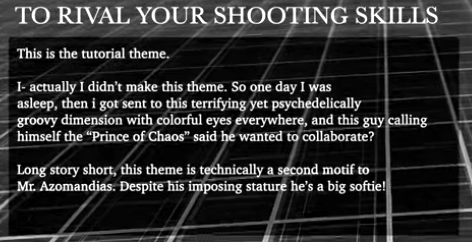
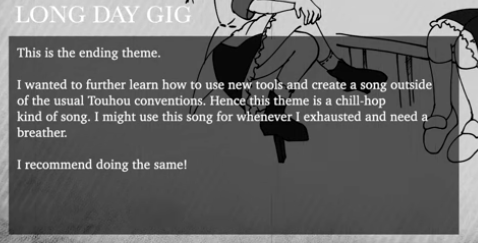
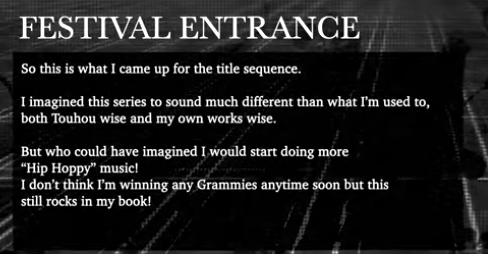
Benji: “Festival Entrance,” “To Rival Your Shooting Skills,” and “Long Day Gig” are the three songs I made on Mac. They have that bouncier hip-hop shine on them that required a more cleaner sound and slower composition.
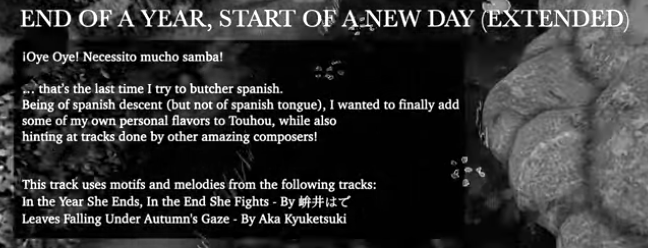
Q: Were there any plans to include homages/melodies from other Touhou fangames or was End of a Year, Start of a new Day always going to be the only track to do so?
Benji: There is technically another reference in that song, “Leaves Falling Under Autumn Grace” by Akakyu. But the original idea was EVERY song be either an arrangement or reference other people’s songs. I felt like it would be disingenuous to just do all arrangements, not to mention what if the original composer said no. So besides asking the composers I did know (Akakyu), I did originals… but I got a bit carried away. I made almost every song an original, it was “End of the Year-” that became the required reference track for any fan-game.
To put it like this, I find making original content easier than arrangements. It’s usually the other way around but I’m a bit of a masochist!
-Had you been allowed to do more than just 12 tracks, would you have gone for a more reference heavy soundtrack, then?
Benji: Yes I would. It would have probably taken longer than it did though, arrangements take a while for me to make.
-Which songs specifically would you have wanted to make an arrangement of?
Benji: Regret and Confessions, by Misora. One of my inspirations when getting into Touhou.
Q: The final boss’s theme features the melodies of previous tracks, was this meant to play on the Big Brother Is Watching aspect of her design?
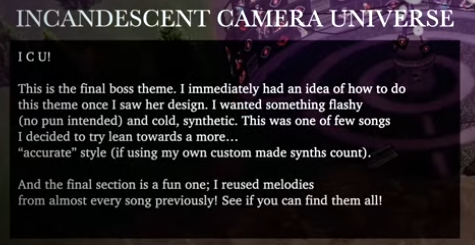
Benji: Kinda? I just did it ‘cause it was cool! But the Big Brother idea did influence other aspects, like the trailer I did for the album release, and the pauses in her theme (fun fact, those pauses where there’s no release from the previous instruments was inspired by this somewhat “Glitch” in PCB’s Phantasm stage theme where before the final section, the song pauses but with no audio or reverb tails.).
-I’m not quite sure I understand what you mean by “a pause with no release from the previous instruments”. Which segment of the song is that?
Benji: 1:29 of “Charming Domination ~ Who Done It”, before the final section of the song. What I’m describing is usually when ZUN does those iconic pauses, it’s by just stopping the instrument’s notes from holding out, but they still have a bit of release or reverb tail. What happens on that song, he stops the entire song’s recording from playing, making that pause completely dead silent for 2 beats.
Q: Were there any challenges in achieving the sounds you wanted to get from each track? Which track did you have the most difficulty with? Which track are you most proud of?
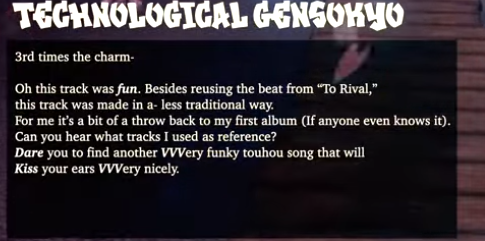
Benji: I usually ran through the issue of “Is it powerful enough?” or if it matched the act’s identity. The only real issue I had was with Technological Gensokyo. That track was MASSIVE and it’s mostly samples. I had the most trouble there since it was basically a fusion of my older first album “SharkHouse” with my Touhou style. I am hard pressed between “Introspective Old Youkai” and “End of a Year” being my favorites, and that’s saying a lot because Techno was supposed to be my song that I thought I would love to death!
-I think you did a pretty good job. I’ve seen plenty of praise towards the soundtrack in the game.
Benji: Thank you! I’ve seen first hand how different people have reacted to this soundtrack vs my previous projects and I’m glad people enjoy it! Maybe now people will want some weirder sounding music than the typical stuff.
Closing Statements
Q: What’s next after Flickerframe Shutter Festival? Are you going to make that Touhou 9/ Touhou 19 style fangame you mentioned before?
Ryann: I’m already producing a new fangame with extremely talented creators from the community, so you can definitely look forward to that. For now, I won’t say much about it, so that it is just a possible speculation.
Other than that, though, I’m always participating in other non-fangame projects in the fandom, so you can look forward to them as well, especially in the near future.
-Thank you for taking time out of your day to answer all these questions. Do you have any closing statements for the readers? It can be anything, tips for playing Flickerframe, advice on game development, or even a funny/cool quote.
Benji: I can’t give advice on Game development because I suck at coding and game making, but I can say whatever you want to make, just keep pushing at it, and learn to fail now and then. The only reason I got to where I’m at is because of my passion and my ability to suck!
My quote will be “See you next Fantasy~”
Ryann: Thank you for this! I really appreciate it. As for closing statements…
A special thanks for my collaborators, who have incessantly helped me develop amazing projects, and a special thanks for my family, who supports me deeply in creating works like these.
If you’re interested in starting on fanwork production, don’t be afraid! There are a lot of really useful guides and materials you can find for illustration, composition, programming, and any other kind of art form you can think of. The community is vast, and there’s a lot of people who can help you get started. Seek places like Illusionary Conservatorium/Consonances and Dissonances (for music), Bullet Hell Engines (for programming), Fanworks ‘n Chill (for general fanwork development discussion and sharing) and you will find these resources.
And thank you very much for reading. I hope this interview has enlightened you in some way or another.
Flickerframe Shutter Festival is available on Steam :
https://store.steampowered.com/app/3829880/Touhou_Kouzougi__Flickerframe_Shutter_Festival/
Interview with Flickerframe Shutter Festival Developers Part 1 End