Touhou M-1 Grand Prix Interview with Ran-T and tonx

Part 1 of the 3-part Touhou M-1 Grand Prix special feature.
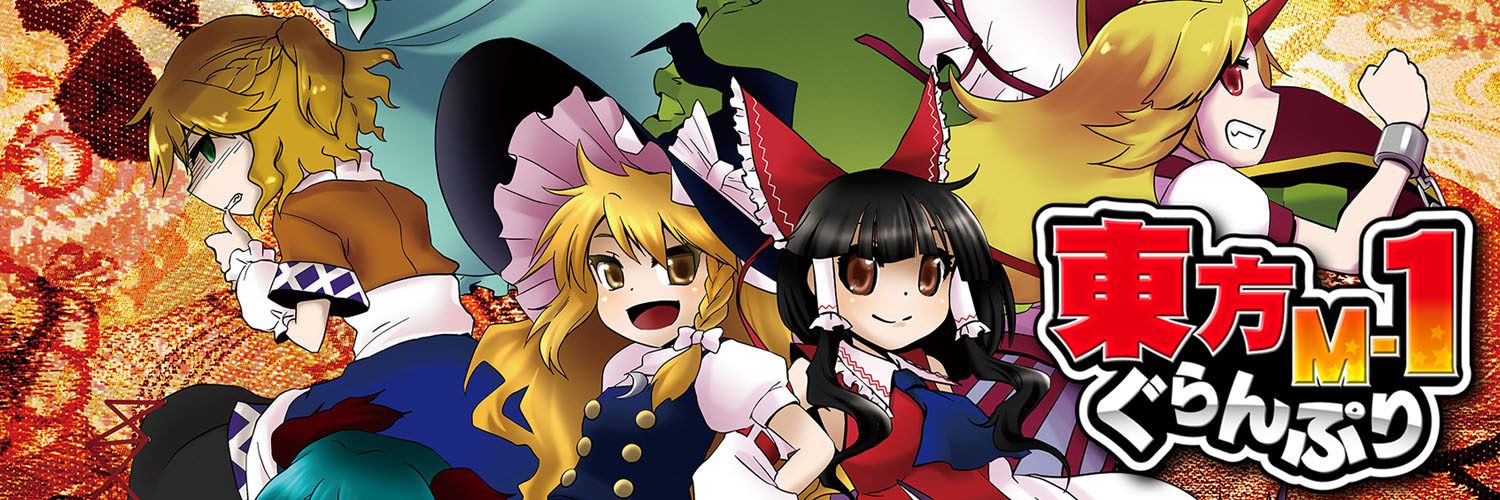

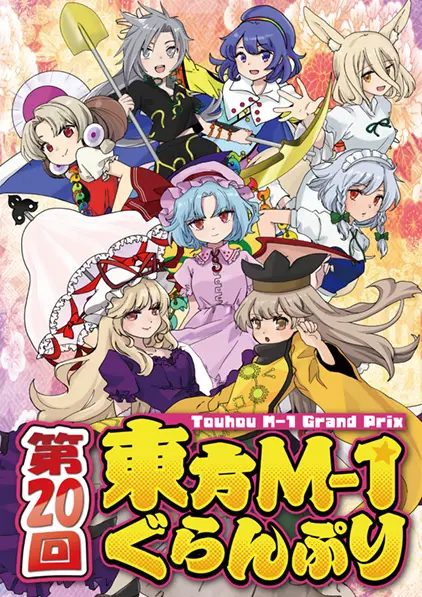
After almost 20 years, Touhou M-1 Grand Prix has reached its monumental 20th installment! To celebrate this occasion, we decided to interview showrunner Ran-T and illustrator tonx to learn more about the process behind creating the series.
Introduction
Q : Please tell the readers your name and your role in Touhou M-1 Grand Prix
Ran-T:My name is Ran-T. I handle almost everything aside from the video and animation. I manage the entire production including the screenwriting, directing, and scripts, as well as the recording, music, and sound effects.
Q : How did you come to know Touhou? What part of the series do you like?
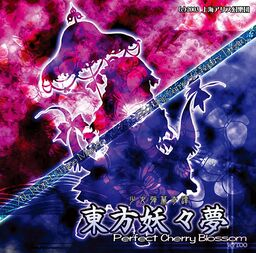
Ran-T:I first learned about the Touhou Project by watching a friend play Touhou Youyoumu ~ Perfect Cherry Blossom. The charm of the characters, setting, and music that ZUN created captivated me, and I still feel just as drawn to those aspects today.
Q : Who is your favourite character? What makes them your favourite character?
Ran-T:My favorite is Shou Toramaru. The moment I saw her first appear in Touhou Seirensen ~ Undefined Fantastic Object, it was love at first sight. She was so cute.
Production of Touhou M-1
Q : What gave you the idea to do an M-1 Grand Prix parody with Touhou?
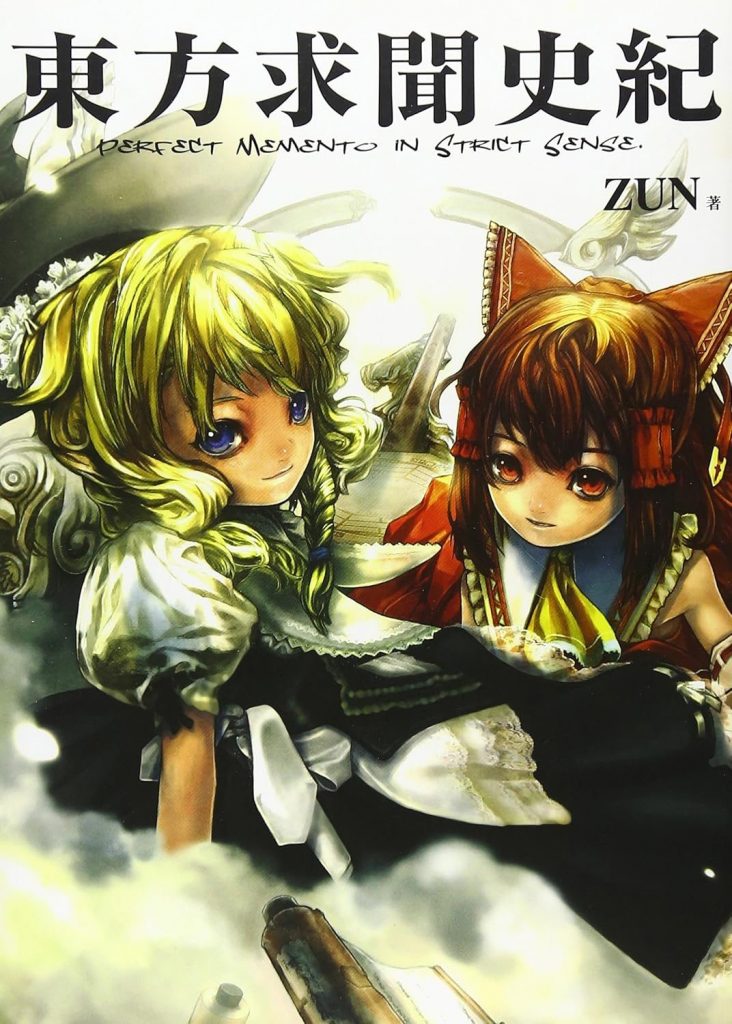
Ran-T:The idea suddenly popped into my mind while I was looking at a page about the Scarlet sisters in Perfect Memento in Strict Sense.
Q : The first 2 Grand Prix were audio drama before gaining visuals from the 3rd one. How much did the change in medium affect the writing in the series?
Ran-T:When the change to video format was made, the directing style completely shifted to one that was designed for a visual medium. In the audio-only ones, characters had to say their names and clearly explain the current situation at any given time. That became unnecessary with video, so the scripts and overall format were able to be created much more naturally.
Q : Have you ever given up on a joke due to medium limitations?
Ran-T:Skits involving large movements across the stage or dancing would be theoretically possible, but would significantly increase the production time and cost. Since it would place an especially heavy burden on tonx, who handles the animation, many ideas are abandoned early on.
Q : Touhou M-1 has an enormous variety of jokes covering a huge range of subjects. What kind of research goes into the writing for the series?
Ran-T:When writing the scripts, I start with manzai ideas and scenarios provided by Takamasa Yamada. From there, I fit those themes into the world of Touhou and its characters, thoroughly checking to make sure that they work within the setting. I carefully consider any conflicts with the characters or setting as we know them, and whether each character’s boke remarks make sense for them to say or not. Once that’s done, those ideas are turned into scripts.
Q : What are your favorite duos to write manzai for? Which duos are the most difficult to write for?
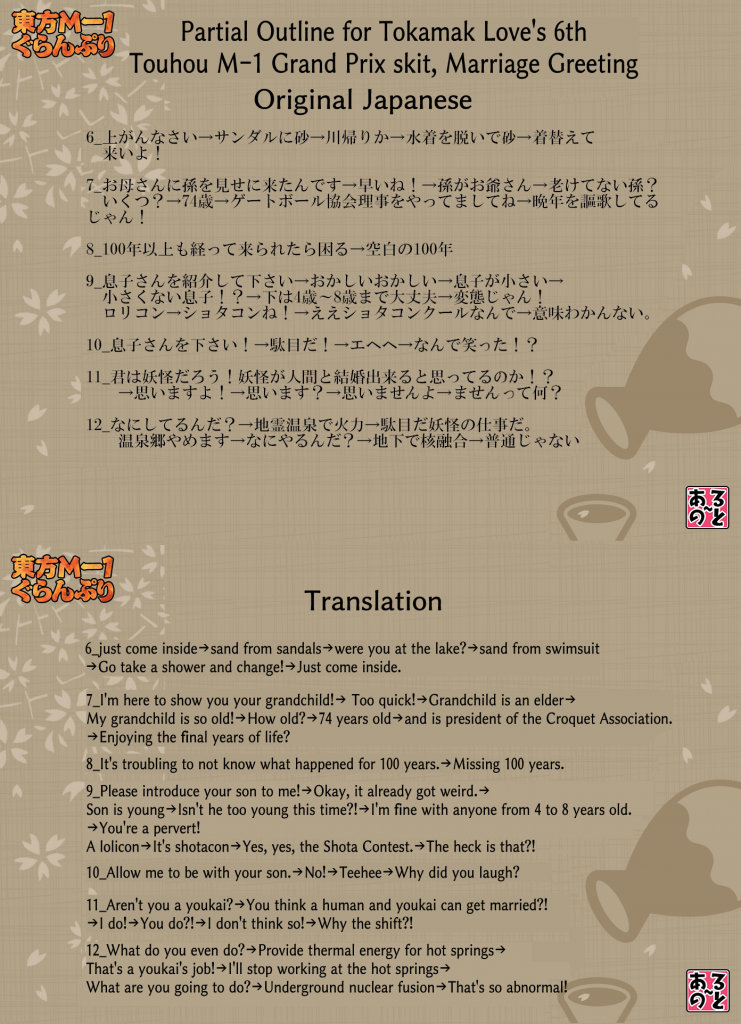
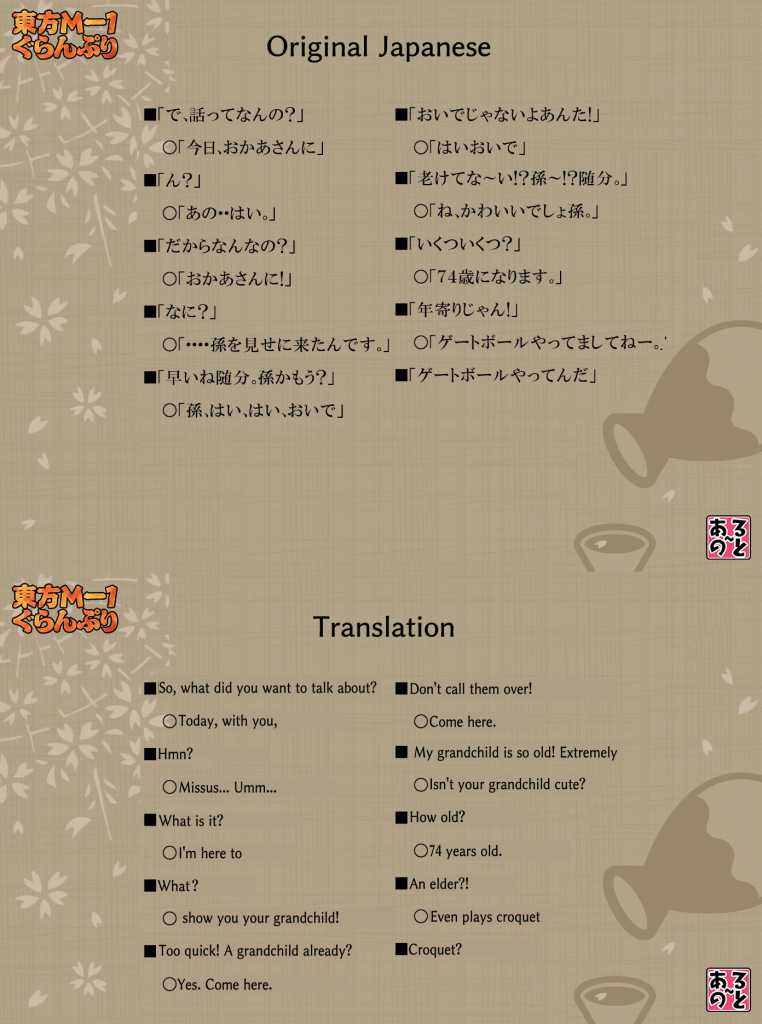
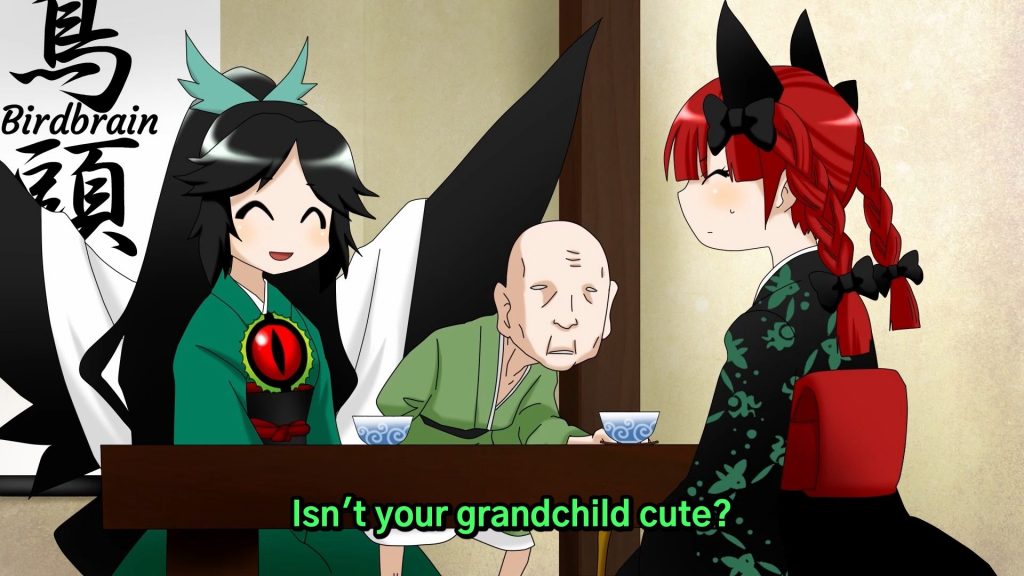
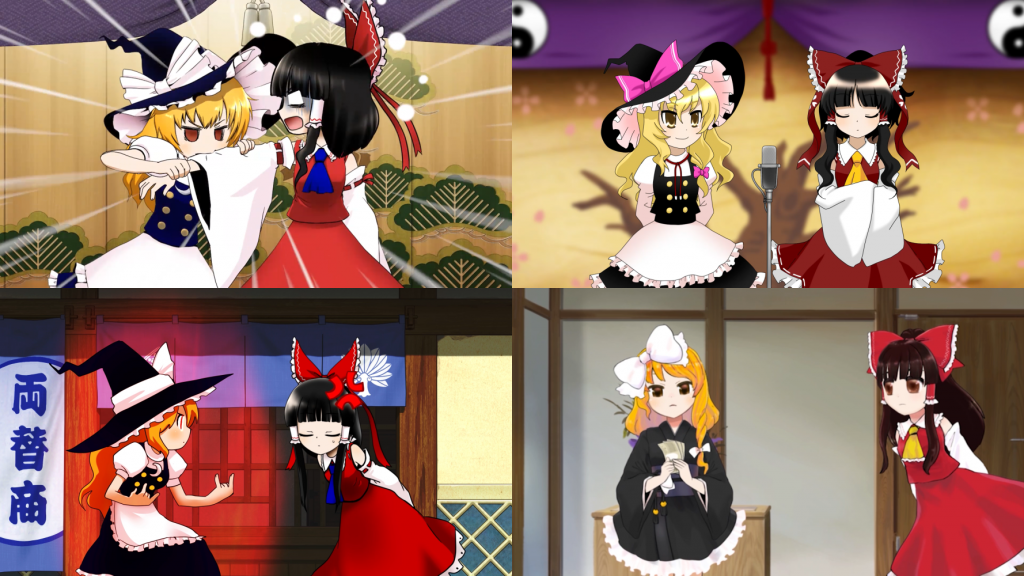
Ran-T:I particularly enjoy writing for new duos or established ones that are easy to keep piling more antics onto. While I don’t feel that any specific duos are difficult to write for, the hurdle substantially increases when the same duo has three or more sketches. The champion tournaments in particular (6th, 12th, 18th) require carefully balancing past continuity with a demand for something new, making them significantly more difficult to structure.
Q : As the voice director of the series, how do you decide what each character should sound like?
Ran-T:For every character’s voice, I always start with a very clear, subjective idea of “I want the voice to sound like this.” It’s often relatively easy to find a voice actor who matches the idea in my head. However, due the nature of manzai as a performance, the reality is that some people can do it and some people can’t. Ultimately, I choose someone who matches the voice in my head and can also perform a manzai effectively, so luck is always a factor involved.
Q : What is your approach to balancing official characterization and popular fan characterization? Do you try to keep it consistent, or do you vary it based on the jokes you want to write?
Ran-T:As a basic principle, I adhere to the rules and standards that are initially established for the characters. I start with my own analysis of the official works and don’t carelessly stray away from the image of each character that I’ve constructed by that point.
Regarding balance with fanworks, from Mountain of Faith onward, our circle has often released works with newer characters before a general fan-interpretation of them becomes widely established. Therefore, rather than aligning with popular interpretations, my approach is to incorporate my personal interpretation of the characters based on the official material.
As a result, the character interpretations that become widely established by fans later on will sometimes align with how I’ve portrayed them, and other times they won’t. However, if an official work later gives more information about a character’s behavior or backstory, I will adjust how they’re portrayed based on that information.
In short, the core of each character remains consistent and exceptions are only made if new information is provided by an official work.
Q : How are duos usually chosen for the grand prix? How is the winning duo decided?
Ran-T:The participating duos are primarily chosen by considering which characters would make reasonable pairings in the original setting. However, in order to strike a balance, characters who have little to no interaction or relationship with each other are also sometimes paired together.
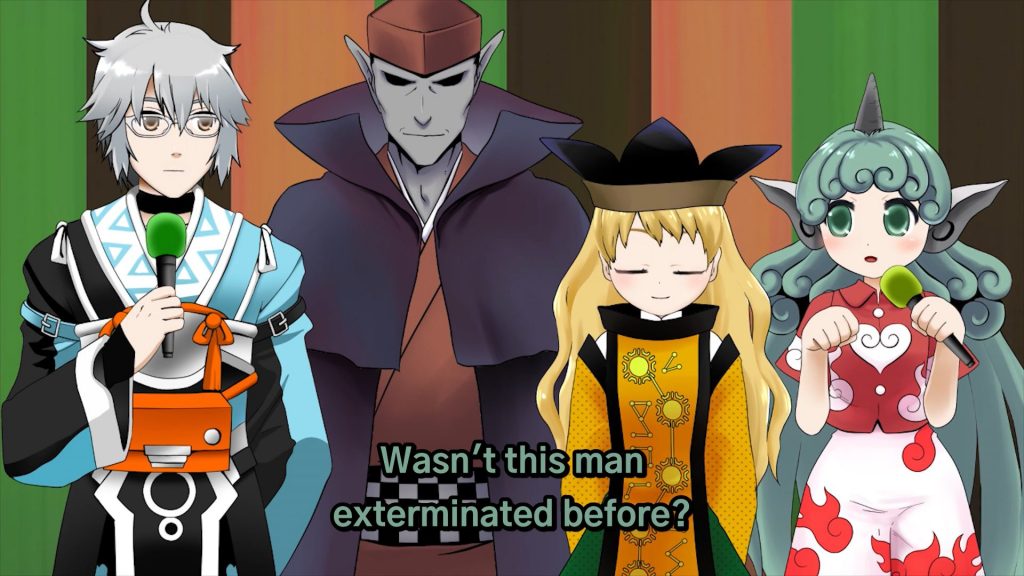
To decide which teams win, I’ve recently been scoring all of them with a self-assessment. The more conscious I am about trying to be fair, the harder it becomes to remain objective, and this process is one of the biggest struggles every year.
Q : How are each duo’s names and entry numbers decided?
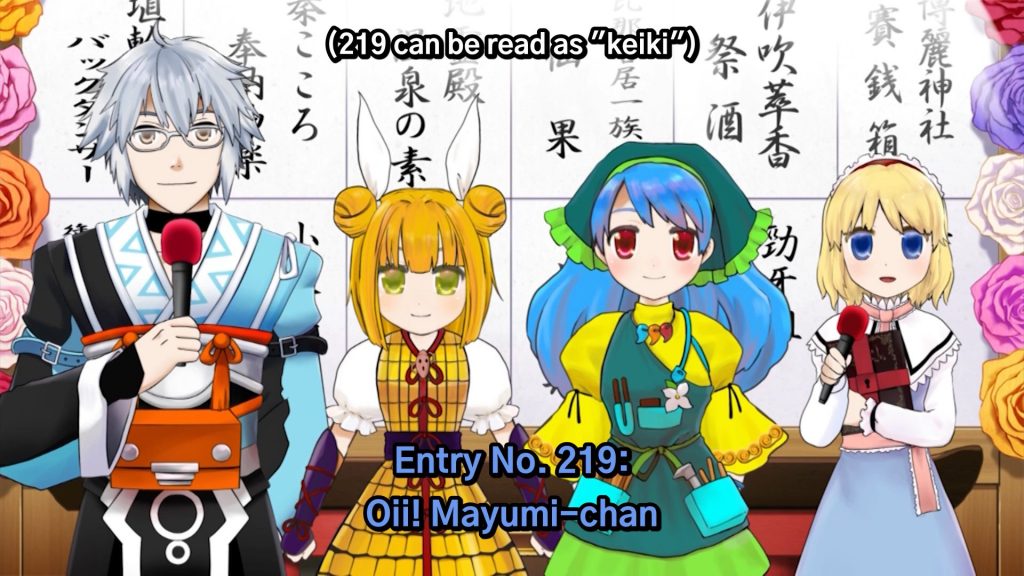
Ran-T: For team names, I clear my mind and jot down about ten ideas for each one and then narrow them down. I try not to overthink it or spend too much time on it. Entry numbers are decided by lining up some four or five-character words that express the characters’ traits and then converting them into numbers using a custom-made cipher table.
Visuals of Touhou M-1 Grand Prix
Q : What was the story of you becoming involved with officially drawing for Touhou M-1 Grand Prix?
tonx:Audio from Touhou M-1 Grand Prix had been posted onto a website called Nico Nico Douga, and I thought that adding visuals to them would convey the humor even better, so I drew them. Nico Nico Douga was a very freeform platform and there was a period when everyone made whatever videos they wanted to and enjoyed them together.
Q : Touhou M-1 Grand Prix has undergone multiple art and animation style shifts over the years. How has that affected your workflow?
tonx:I’ve tried to adapt the art style to each era, which involved a lot of trial and error, and you can see some signs of that. In the early days, I used “Adobe Flash,” but when it got discontinued, I took that as an opportunity to start thinking about how to make the movement more natural and fluid as well as improve work efficiency.
Q : How much direction are you given for the animation? How do you go about portraying parts that are left up to your interpretation?
tonx:The script gives basic directions (ex. “waving hand”). For parts left to interpretation, I add gestures that are trending at the time and movements that are easy to understand at a glance.
Q : What is your favorite visual gag or bit of animation that you’ve added to a manzai?
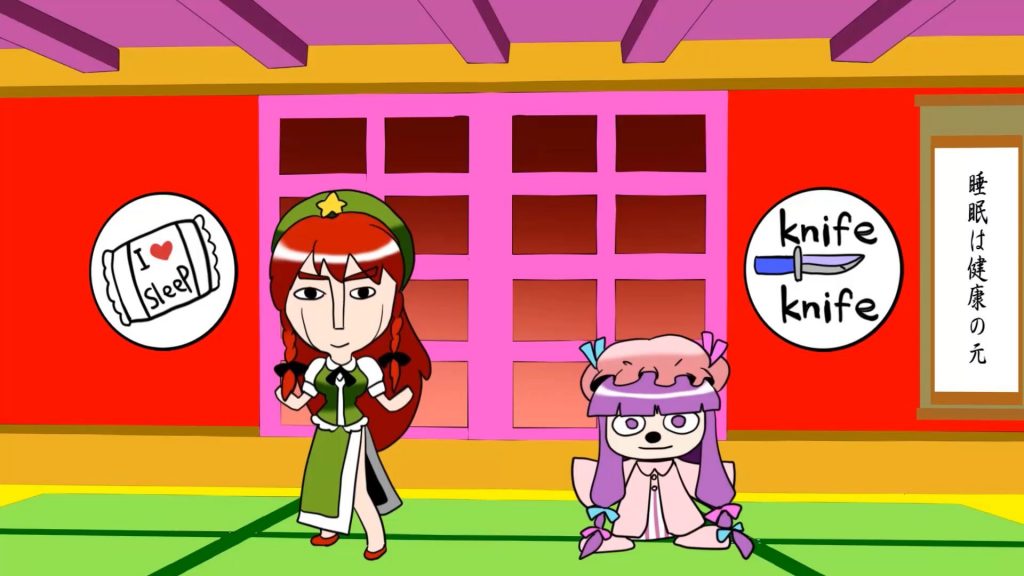
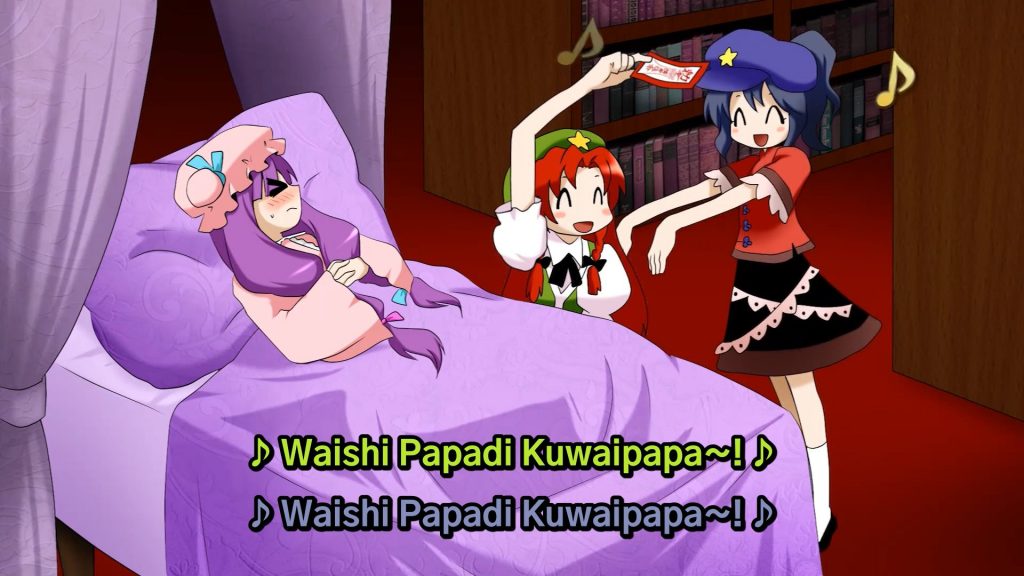
tonx: PatchuMirin’s “Patchuppa the Rapper” from 2nd Touhou M-1 Grand Prix R.
Q : Touhou character designs change often, and some details are never consistent. When you make assets, do you always base them off the most recent design? What’s your approach to ambiguous or inconsistent design details like eye color, or parts of the character you need to draw that aren’t visible in official artwork?
tonx:I basically use the most recent designs. For parts that are unclear, I adopt the most widespread interpretation found in fanworks, using what’s generally agreed-upon.
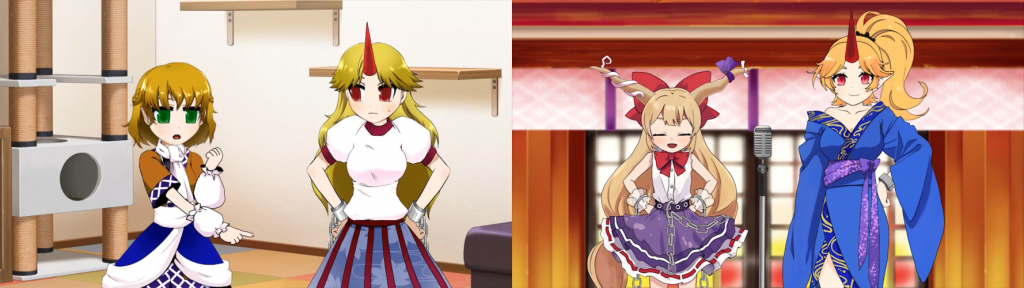
Q : Are there any visual gags that you wish you could do, but you know aren’t feasible for one reason or another?
tonx:Almost everything I’ve proposed has been accepted, so none in particular.
Miscellaneous Questions
Q : What is the general production process for a Touhou M-1 release? How long does it usually take to complete?
Ran-T:Production begins with a general concept and deciding which official Touhou title will serve as the main focus. After that, I make arrangements with a recording studio while drafting several team ideas, narrowing them down to five, and negotiating with the respective voice actors. We finalize the participants while adjusting the teams based on the voice actors’ schedules.
Once the teams are decided, I choose suitable themes from the scenarios provided by Takamasa Yamada and create the actual manzai scripts. The scripts get refined through a process of repeatedly recording placeholder voice lines and making adjustments, increasing the quality each time. After that, the actual recording sessions happen, provisional audio files are made, the visuals are produced, and then the audio gets finalized.
From planning to completion, the process typically takes about half a year.
tonx:My production workflow begins once the script is finished and I create the characters’ standing poses. After that, I prepare their animation using the provisional audio, and then adjust the timing to the final audio. It takes 2-3 months to complete.
Q: Touhou M-1 has been a consistently on-going series for almost 20 years. Has your perspective on the series shifted at all over the years?
Ran-T:In the early days, creators and viewers were typically similar in age and sensibilities, so we just used whatever themes or parodies we wanted to without overthinking it, opting to cram in whatever seemed funny.
But after ten years of production, our audience expanded, and so we began to deliberately choose joke material that is easier to understand by people of all ages and genders.
Nowadays, more time is spent considering compliance issues, especially with sensitive topics or nonsensical depictions. But with that said, I don’t feel as though our outlook has softened. Rather, we just tune the way things are expressed to be more suitable for modern times, while our fundamental stance hasn’t changed.
tonx:In the early days, this was an extension of my hobby, so I freely drew what I liked. Over time, I’ve become more thoughtful about not causing discomfort to viewers.
Q : With the series now available on Youtube, Touhou M-1 Grand Prix is more accessible to an international audience. How has that affected the series?
Ran-T:To be honest, making the series accessible on YouTube and seeing an increase in overseas viewers hasn’t changed our production style. I think Japanese anime, games, and doujin works are beloved around the world because the creators genuinely make them for Japanese fans to enjoy and that passion crosses national borders. I feel that creations that try to adjust themselves for more “global appeal” lose the charm that they originally had. I believe that what overseas viewers want is genuine Japanese entertainment that’s made for Japanese people to enjoy, which is to say, manzai itself. Because of that, I still focus on making things that make Japanese people laugh the most. I think doing so is the path to making overseas viewers enjoy it as well.
One thing has changed though. When English lines are spoken in the dialogue, I now instruct the voice actors to speak in Japanese-pronounced English, even if they can speak English natively.
tonx:I used to think that all content inevitably gets boring after it keeps going for a long time, so I’m surprised to see more viewers showing up from different parts of the internet. It’s fueled my creative drive even more.
Q : When you work on Touhou M-1 Grand Prix, what software or websites do you make use of the most often? Are there any that one might not expect?
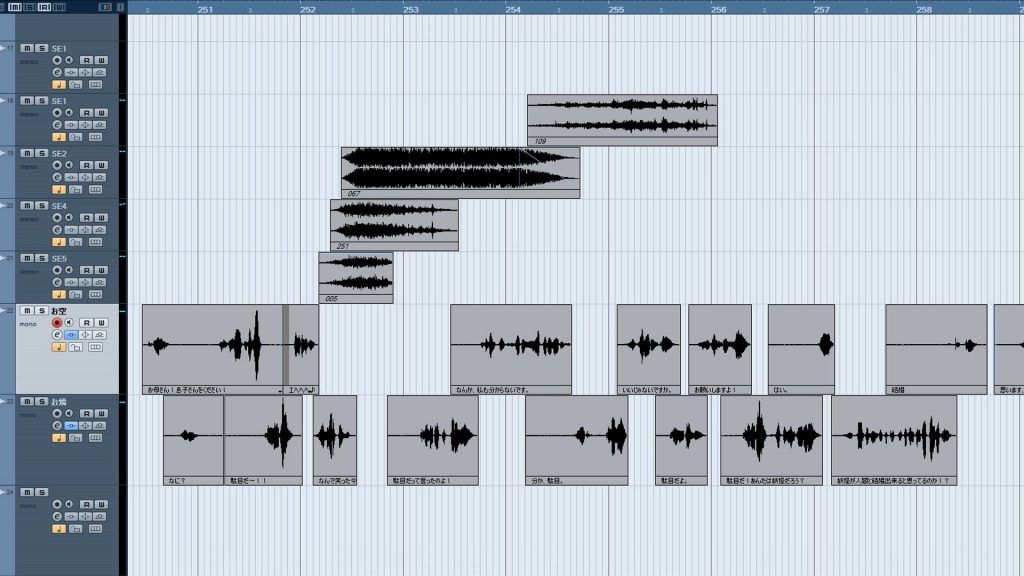
Ran-T:The software I use the most frequently are “Cubase” for audio editing and music production, and “Adobe Premiere Pro” for video editing. I don’t use any particularly unusual tools, mainly using those two for production.
tonx:The software I currently use are “Live 2D,” “Adobe Premiere,” and “Adobe Photoshop.”
Q : What are the biggest challenges you face during production?
Ran-T:The main challenge is ensuring the credibility of the scores and rankings. Scheduling and budgetary constraints are also always a concern. Ideally, the five teams in the first round would have their performances evaluated by a trusted community of about 200 people. I would like to do the same for the finals as well. It would be difficult to implement that as-is, but it’s an idea I’d like to try at some point.
tonx:The deadline.
Q : What’s the most persistent limitation, not necessarily a challenge, you encounter when working on Touhou M-1 Grand Prix?
RanT:With the series running for so many years, voice actors are a constant limitation. Some voice actors are unavailable at certain times due to personal circumstances. Nowadays, I sometimes confirm which voice actors are available first and then decide on the teams based on that.
This is especially the case for the EX series, where we can’t always choose the duos that we want to. I feel that this is an inevitable limitation for a long-running series.
tonx:The production schedule. With so many voice actors, the finalized voice files aren’t finished until late into the production process, and when pronunciations or nuances are different from what was expected, it’s impossible to predict how much time will be left for corrections.
Q : Did you have experience with manzai before producing Touhou M-1 Grand Prix?
Ran-T:This was a long time ago, but for a very short time, I actually did manzai.
tonx:I didn’t. I’m just a fan who loves manzai and watches it often.
Q : Which Grand Prix is your favourite? Which one would you recommend to someone who hasn’t watched the series?
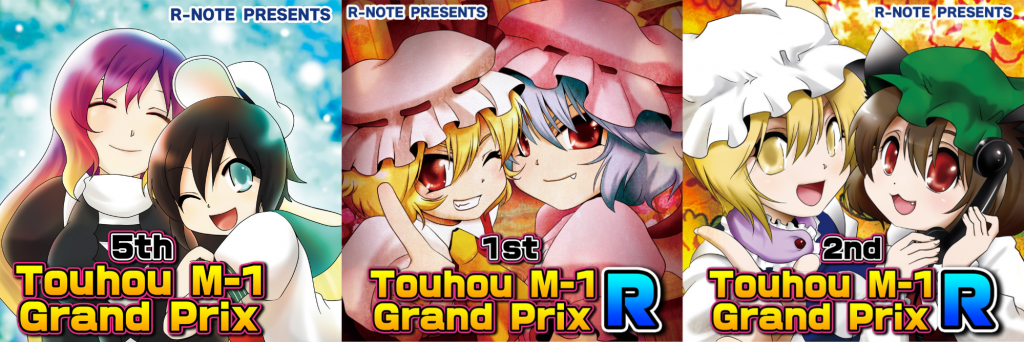
Ran-T:I’m particularly attached to the 5th Touhou M-1 Grand Prix. That installment was the first in the series to use a 16:9 aspect ratio and it was screened to a general audience at the Akihabara UDX Theater, so it left a strong impression on me.
For someone who has never seen the series, I recommend “1st Touhou M-1 Grand Prix R.” Its overall mood and structure are easy to understand, and I think it’s a suitable entry point.
tonx:My favorite is the 5th Touhou M-1 Grand Prix. For someone new, “2nd Touhou M-1 Grand Prix R” might have jokes that are easier to understand.
Closing Statements
Ran-T:Firstly, I would like to give my heartfelt thanks to the fans who have watched the series over the years, as well as Hou and the others on the translation team.
Touhou M-1 Grand Prix began due to being fully captivated by the world of Touhou Project which made us think, “We want to create a fictional manzai contest that we truly find funny.” It exists because ZUN continues to produce official works and is very open-minded about derivative works. That foundation is what allowed us to freely come up with ideas and pursue the creation of comedy.
To touch on the “How are scores decided in Touhou M-1 Grand Prix?” question asked earlier again, I’ll explain a bit more here. The answer is simple: The scores, rankings, and final winner are all based on a subjective assessment. The scores are assigned based on a feeling of “This sketch is probably about this funny.” Then, among the teams that advance to the finals, the winner is decided by an open vote. The entire process is purely subjective.
However, something that’s constantly on my mind during production is, “How would someone watching this probably feel?” Predicting that becomes more and more difficult every year and is one of the biggest hurdles during the production process.
Originally, manzai is a performance presented to a live audience. Whether a joke lands or not is immediately apparent and performers will make on-the-fly adjustments by improvising the routine, altering the tempo, or ad-libbing lines. That is to say, manzai is very much a series of quick, in-the-moment gags.
With that said, Touhou M-1 Grand Prix is structured completely differently. The audience’s reactions, including the laughter itself and the timing of it, are all scripted and added in advance during production. However, as the creator, it’s impossible to know whether that laughter actually reaches viewers beyond the screen and makes them also laugh or not.
Basically, Touhou M-1 is a bunch of assumptions about things like “This joke should land.” or “This flow should work.” Structurally, rather than actual manzai, it’s created more like a comedy movie or gag manga.
With gag manga, nowadays if you post it online, you can receive feedback within a day. By contrast, with a comedy movie, you proceed without knowing if the script or storyboard is truly funny, and you only learn how the audience reacts to it a long time afterward with its completion or screening.
Touhou M-1 Grand Prix is exactly the same. The winner, the scores in the first round, the manzai that earned those scores, the comprehensibility of each moment, and whether or not the amount of laughter is appropriate for each joke are all just a hypothesis. During production, there are no actual answers to these questions.
To give an analogy, it’s like playing catch blindfolded so that you can’t see your partner. You feel yourself throw the ball, but you can’t immediately tell if it came back. The response only comes long after you’ve already thrown the ball.
On top of that, Hou and the others on the translation team are doing translation work while analyzing each moment with questions like, “Why does this boke action or remark create a joke?” and “How would this be interpreted if converted into English?” You could say that this is like a blindfolded announcer trying to commentate a blindfolded game of catch by predicting the current situation. They are converting material that the creators themselves are unsure about into another language. I think that the unique structure of the series is likely one factor that makes its translations difficult to grasp.
As we continue to release each installment blindfolded, each and every reaction or response we get greatly supports the creation of the next one. We plan to continue producing the series, so firstly, please enjoy this year’s new release, 20th Touhou M-1 Grand Prix. We would be grateful if you look forward to next year as well.
tonx:I’m very grateful for having a life that has allowed me to be involved with the wonderful creation that is the Touhou Project and the numerous fans who love it. I always feel supported by your kind encouragement and advice. I was very anxious at first, but everyone’s love has allowed me to continue until now. Thank you so much!
The 20th Touhou M-1 Grand Prix is now available on R~Note! Official Youtube account!
YouTube
You can also purchase it digitally on the following sites :
DLSite
Booth
Touhou M-1 Grand Prix Interview with Ran-T and tonx End