Interview with Touhou M-1 Grand Prix Translation Team Part 1

Interview with the Touhou M-1 Grand Prix EN translation team
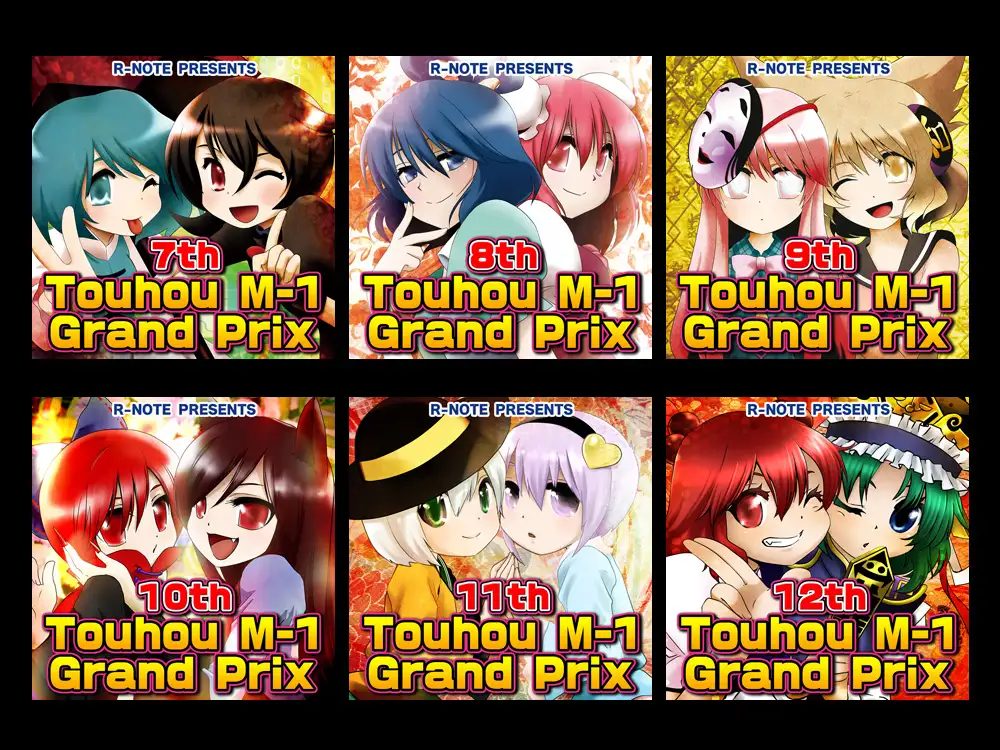

Spreading laughter and joy in the Touhou fandom since 2007, The Touhou M-1 Grand Prix series has been a mainstay fanwork for almost 20 years. With the 20th Grand Prix coming up, we decided to interview the translation team to learn more about their efforts in making the series available to a wider audience.
Getting to know our interviewees
Q : First, let’s begin by letting the readers know who you are. Please introduce yourselves, what is your name, and what is your role in the translation of Touhou M-1 Grand Prix?
Hou : Hi, I’m Hou. I’m the main translator and subtitler for Touhou M-1 Grand Prix. I generally do most of the Touhou M-1 stuff on the EN side including the translations, the subtitling for the videos uploaded to YouTube, as well as the English version sold on DLsite, BOOTH, and at TouhouFest.
alonectorch : Hi, I’m alonectorch. I am one of two Quality Control members of the Touhou M-1 Grand Prix translation group. That’s my primary role, but since there’s only a few of us, I’ve ended up doing a lot more than just QC.
Q : How were you introduced to Touhou? What particular aspect of the series do you like?
Hou : Honestly, answering how I was first introduced would probably be impossible because I knew about it simply through internet osmosis back in like 2007-2009. “McRoll,” as people call it, is probably the oldest Touhou meme I can think of that took off overseas, so maybe it was that?
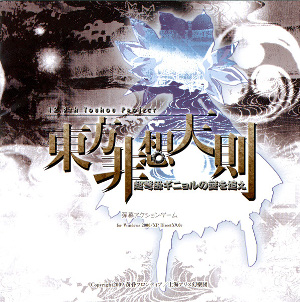
But what led me to getting into the series was actually the TasoFro fighting games. A friend and I enjoyed casually playing fighting games but we lived far away from each other, so we were looking for fighting games with rollback netcode. As it turns out, Touhou 12.3: Hisoutensoku actually had a community-made rollback patch that had better online connection than most modern fighting games at the time. So that was the first Touhou game I had actually played and is ultimately what got me to jump in.
-Ah, I take it that you’re a fighting game enthusiast, then? Are the TasoFro fighting games the main thing you enjoy?
Hou : I enjoy fighting games, but they’re usually just a relatively casual activity I tend to do with friends. I don’t usually play online ranked games, nor am I particularly good at them. As far as Touhou games go, I think Hisoutensoku is the main game that I still find myself regularly playing, even as new games keep releasing.
I think what ultimately draws me to Touhou is the setting itself. I think Gensokyo is the perfect setting in which you can tell any story you want to with unlimited potential. ZUN has provided a wonderful canvas on which anyone (including himself) can express their creativity. I think this aspect is what draws me to Touhou–how versatile the setting is and the results of that.
-The “any myth/legend can be real in Gensokyo” concept opens up the door for all sorts of ideas, doesn’t it?
Hou : It really does! Essentially by its very existence, any fantasy can exist in Gensokyo. Any story can exist there.
alonectorch : How did I get introduced to it…? It’s so hard to remember, lol. I’ve known about it since middle school ever since somebody showed me Bad Apple! for the first time. Funnily enough, I was resistant to the idea of learning more about Touhou for a few years, since my best friend at the time kept trying to force it upon me. However, hanging out with him while totally bored one day, I decided to try Adventures of Scarlet Curiosity on PS4. Despite my earlier resistance, I immediately became hooked, lol. When I encountered Utsuho, I was enraptured by the idea of a nuclear demon. That was so cool to me at the time. Naturally, I went down a rabbit hole which eventually led me to Touhou M-1 Grand Prix.
As for what particular aspect of the series I like, I think it has to be the sheer volume of fanwork to the point that there’s a rule of the internet that says: ‘If it exists, there’s Touhou of it’. That, and ZUN’s absolute commitment to doing his own thing and making what he likes regardless of what the fans want.
-Is there a particular fanwork that you like? Aside from Touhou M-1 Grand Prix, of course.
alonectorch : Ough, that’s such a tough one. I particularly enjoy the videos independent animators online have made. I’m a particularly big fan of Vegemite-Flavored Indomie’s stuff. Them and MTB. As far as ‘proper fan works’ though….I particularly enjoy Touhou Ibunseki – Ayaria Dawn Re:Creation.
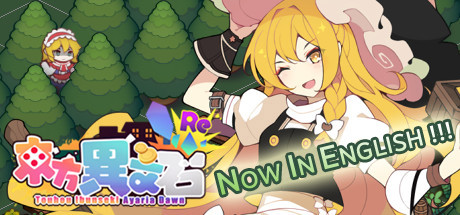
-Ah, that’s the Monopoly-like game, right? Are you a fan of board games, then?
alonectorch : Actually, I kind of hate board games, haha! Nothing against anyone who likes them, though. I wish I could enjoy them. Anyway, I really enjoy how dense Ibunseki is and all the dumb jokes and references there are everywhere. It’s a fanwork that really feels like it was made by a bunch of hardcore fans. I also do enjoy the gameplay in spite of my general disdain for board games.
Q : Who are your favourite characters? What makes them your favourite?
Hou : My favorites for a long time now have been Yukari and Doremy, but for extremely different reasons.
I like Yukari for what she brings to the world of Gensokyo and I think boundary manipulation is a fascinating ability to give a character. It, much like the setting itself that I mentioned earlier, has basically unlimited potential if you imagine the right circumstances for it, but in practice it tends to be used in very convoluted and arguably impractical ways. But that in and of itself is part of what I like about Yukari. I like that she never does things in a way that seems practical to us. I think it’s such an interesting contrast to have a reality-bending ability but to never use it in a way that seems intuitive or obvious. Intentionally being a confusing myth is basically part of her character and I like that.
alonectorch : Oh, I also really love Yukari! Part of it is that there’s some intentional lack of clarity on whether Yukari is actually as powerful as she lets on, or if she’s just crafted that image about her. On the very rare occasions where she straight up fights, she typically loses, for example. What are your thoughts on that?
Hou : I don’t think we see her in enough straight up fights to know. She technically loses a danmaku fight in PCB but nothing becomes of that. I guess she lost to the Lunarians, but that’s on such a different scale than most conflicts in Gensokyo.
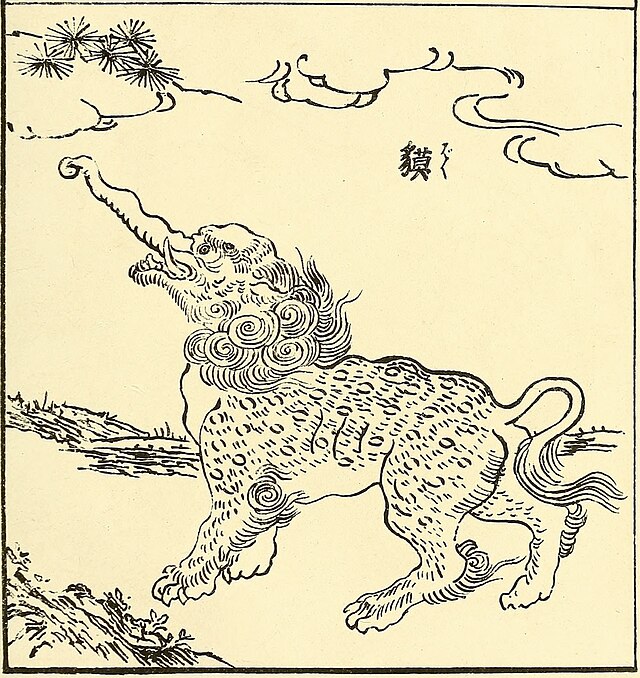
As for Doremy, it’s really just the way TasoFro animated her in AoCF. What can I say? She fights like an absolute buffoon in that game and I love every second of it. Ochre Confusion, her second spellcard in LoLK, is also one of my favorites in the series because I think the spiral motion is fun. I also just think baku in mythology are interesting. That helps too.
-Is it the idea of eating dreams that you find interesting?
Hou : I think the nightmare eating aspect is interesting but I also think it’s interesting that baku are basically just an amalgamation of leftover parts from other creatures.
alonectorch : Oh, that’s easy. I just so happen to have already put a ton of thought into that. In ascending order, Hatate, Nitori, Remilia, Satori, Yuugi, Sanae, Utsuho, Marisa, Yukari, and Sumireko.
Sumireko’s my number one favorite because she’s the worst. She’s one of the most insufferable possible characters: a chuunibyou who was proven right. She’s awful in the outside world because she’s convinced that she’s so much smarter than everyone else that there’s no point in her talking to anyone. She even made the Hifuu Club primarily so that she could avoid having to bother with other people.
She’s awful in Gensoukyou, too. She’s not immediately hostile, but it’s almost worse because she treats everyone as if they’re nothing more than her favorite characters. She shows no respect to anyone. Like how she gives most residents of Gensoukyou nicknames as if she’s known them her whole life. Imagine how obnoxious that would be to be on the receiving side of.
All of that is like, the peak of a character who’s The Worst being done right. Rather than it being annoying to me, I think it’s hilarious. She’s a very fun character to laugh at, but her unique perspective also leads to a lot of interesting dynamics. Additionally, I really love how her introduction to the series was her trying to blow up the Hakurei barrier. She was willing to most likely die for coin-flip odds at proving to everyone in the outside world that she was right about the occult and Gensoukyou all along. I can relate to being that stubborn and convicted about some things, lol.
-Interesting, I get the impression that people dislike Sumireko for those very same traits. Yet you find it endearing and funny instead?
alonectorch : When it comes to fiction that doesn’t expect me to fully immerse myself, I’m typically happy to laugh at characters who act terribly like that, if I happen to find them funny, I won’t take them too seriously. If they’re funny, it’s all worth it to me for the sake of the comedic potential. It does mean that I don’t take Sumireko as seriously as I take Marisa or Yukari, but what the heck, she brings me joy. Thinking about it more, while it is funny on a surface level, she also brings a unique perspective that no one else in Gensoukyou really has, which leads to fun dynamics nobody else can really create. Sanae’s from the outside world, too, but she’s a bit…crazy? And tends not to question things, which can be a bit uninteresting compared to Sumireko.
Touhou M-1 Grand Prix Translation
Now that we’ve given the readers a chance to familiarize themselves with you, let’s hear about the translation of Touhou M-1 Grand Prix.
Q : How did you become involved in the translation of the series? And what made you want to translate it?
alonectorch : I found the free clips on youtube, fell in love, and binged all of them over the course of a couple days. Not being satisfied, I checked the channel and couldn’t find a new translation posted within the last year. That made me a bit worried that there wouldn’t be any more. At the end of each clip, Hou is credited as the translator. Somehow I ended up finding her Discord, so I messaged her, wanting to know if the translations would continue. We got to talking, and eventually, she invited me to help do test watches for Touhou M-1. Luckily for me, she desperately needed help with that at that time. She had evidently already tried asking a couple friends, but it seems everyone she could ask didn’t really like Touhou M-1, so I ended up being pretty much her only option, lol.
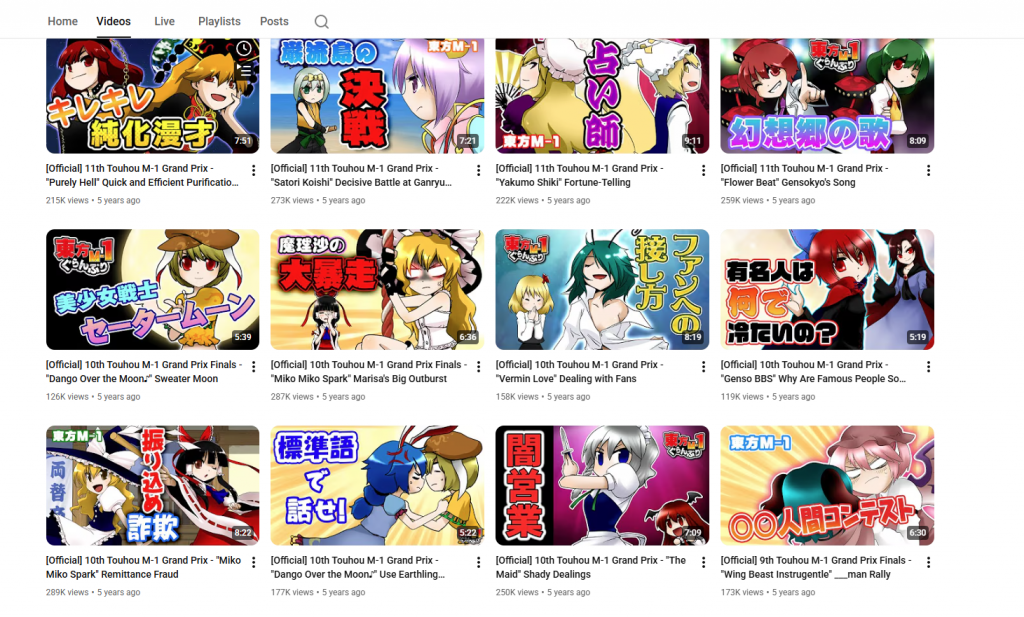
When I was presented with this opportunity, refusing never crossed my mind. To begin with, I had already been looking for another translation project to contribute to for a couple years, ever since Kagerou Project went up in smoke. You see, not only is it fun, but helping with fan translations is also a great way to strengthen one’s Japanese. That, and of course it would be an avenue for me to get to watch all the new Touhou M-1 content. So I was happy to do it!
-The series is full of complicated puns and hard to translate jokes, though. Were you actually able to learn Japanese through it?
alonectorch : Precisely because the series is full of complicated and hard to translate puns, I had to learn more Japanese. I needed to learn how a lot of those puns worked in order to be helpful beyond just looking for typos. How useful a lot of the Japanese I learned via Touhou M-1 is in daily life, though, is debatable.
Hou : Honestly, I was happy that you contacted me. It was still really early on in the process, so you reaching out to me hoping for more Touhou M-1 while I was subtitling more Touhou M-1 was very encouraging. It gave me an affirming feeling of “Yes, people want to see this happen.”
As for me, I originally discovered Touhou M-1 in 2015-2016 through admittedly illegitimate Nico Nico Douga clip uploads. I was one of those sad overseas people who couldn’t really watch it legitimately. Eventually, I was able to actually buy the DVDs, but there was that awkward gap where there was realistically no way for me to watch the series. And I think R-note also recognized there were people like me out there.
In 2020, R-note began uploading free clips of the series on YouTube, asking for volunteer translators to translate the clips into other languages. At the time, YouTube had a “community contributions” system where anybody could submit subtitles to a video and they’d be attached to the video once approved by the uploader. This was a chance to share this amazing series with the world. So I began to subtitle the videos. One-by-one, slowly but surely, I was subtitling them, albeit at a not-so-amazing quality because I was trying to subtitle them as quickly as possible after they were uploaded. However, mid-way through R-note’s uploading, YouTube terminated this program because it was being used to troll too much. I was no longer able to simply submit subtitles.
My only option was to contact R-note directly, give them subtitle files, and ask them to attach the subtitles for me. From that point on, I was directly in contact with R-note and they eventually asked me if I would subtitle the full videos for their YouTube channel members. I was thrilled that R-note asked me to do that and eventually, that led to all of their videos being subtitled.
-Did the change from submitting community subtitles to being in direct contact with R-note change your approach to translating the series?
Hou : Not at first. It’s actually the change from subtitling the video clips to subtitling the full versions that did. Before the full versions got subtitled, the clips were the only thing that people had to go off of, and so I subtitled them as though they were standalone videos because, for all intents and purposes, that’s what they were for English speakers. English speakers didn’t have the context from the full versions, so they were subtitled from that perspective. Now that the full versions are subtitled, they’re very much treated as “clips from a full version” and don’t have any adjustments made from the full versions.
For example, there’s a segment in the 10th Touhou M-1 where Reimu directly addresses Marisa having taken a drink from Kasen’s Box of a Hundred Medicines during the in-between segments of that tournament.
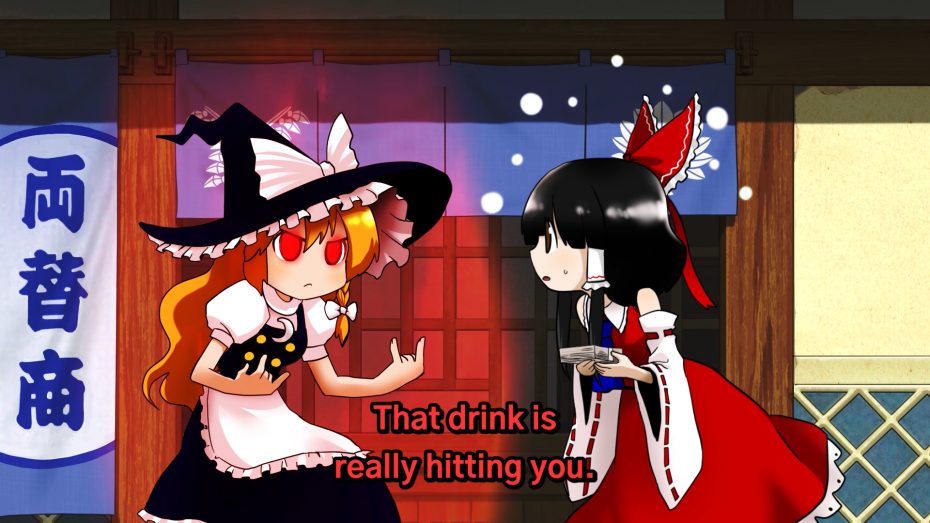
I don’t have a subtitle file for the video, so I don’t remember exactly what the subtitles said, but they didn’t assume that the viewer would know what’s being referred to, so the segment was worded quite differently.
-I see. Was it more convenient to translate them as individual skits? Or does having the context of the in-between segments actually help in figuring out the intent of each skit?
Hou : Well, it’s a bit of a mixed bag. Having the full context obviously helps because Touhou M-1 releases are designed to be a single tournament consisting of multiple performances, so they’re meant to be watched in one batch including the in-between segments. Treating them as individual skits actually creates problems because you have to work around the issue of there not being context, often by using wall-of-text “TL notes” to explain things.
On the other end of the spectrum, and in its current state, the videos don’t provide any extra context whatsoever, so for people who only watch the clips and not the full versions, there are definitely some parts that are probably unclear if they’re referring to an event that happens outside of the skits themselves.
But for the full versions, I wanted to subtitle them the way that they were designed to be watched, so the clips were essentially disregarded while subtitling the full versions, and whatever the subtitles were for the full versions were used in the clips, context or not. That’s also the experience that Japanese-speaking viewers are having, after all.
alonectorch: Were you going to mention how being in contact with R-Note allowed you to have access to scripts? I remember how difficult it could sometimes be for you before you got access to them. Now that I think about it, back then, the subtitles were uploaded after the fact rather than in time for the premiere, weren’t they?
Hou : OH YEAH! That’s a huge change that I completely glossed over. From the release of 16 onward, I started subtitling the new releases before they premiered. It was pretty manic to try to get a full 75 minute video subtitled in the short time I was given. Since I was in such a rush, I finally asked for a script for the first time, and WOW, I should’ve done that sooner in hindsight. Research is so much faster when you can read the exact way that a line is written in the script.
And from the release of EX5 onward (the release from Summer 2024), I’ve actually been able to receive work-in-progress audio files in advance. That gives me more time to go over every line with a fine-tooth comb, so I personally think the subtitle quality has notably improved since then, but maybe in ways that are hard to notice as a viewer since it has to do with how the English lines compare to the Japanese ones; it’s a stylistic change that I think makes the English dialogue flow in a more expressive and natural way. Having a few extra weeks really goes a long way.
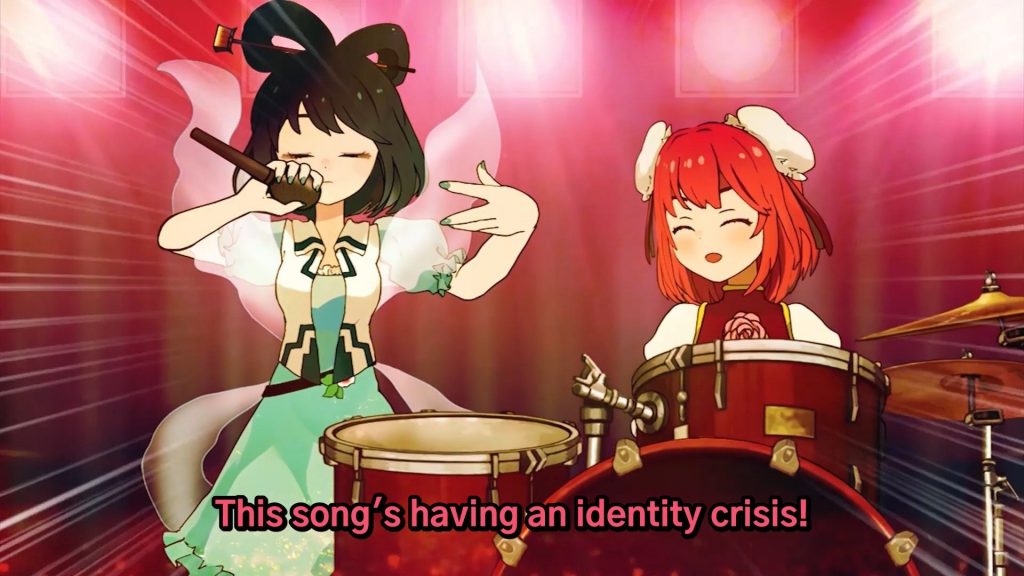
Q : What other particular challenges do you face in translating the series? What was the most difficult skit/joke to translate?
alonectorch : Not much is expected of a QC member, so honestly, one of those difficult skills I needed to acquire was knowing when to let something go, lol. Like, when your whole job is to nitpick and suggest changes, and every part of your brain is screaming that x needs to change, or y needs to be added, or z should be removed, and you’re not getting anywhere with the others, you just have to remember that it’s not your project and move on. That can be really difficult. Another difficult, however rare, aspect of QC-ing is when Hou is like “Alright, I’m going to be honest with you. I’m really not sure how to translate this, so I kind of need to bring you up to my level, and explain all of the context to you so I can pick your brain for ideas.”
Hou : Yeah, sorry about that, haha. Occasionally, we’ll disagree on how to word a certain line, and if it feels like we’re not getting anywhere, I’ll kind of just make an executive decision and move on. I value every little bit of feedback I get during our QC sessions, but that doesn’t mean it’s a democracy. I’ll still be an evil tyrant if I need to be.
alonectoch: No worries, lol. It’s just kind of the nature of the beast with collaborative projects like this. If anything, I’m thankful to get practice with that skill. I think it’s one that people who don’t often have to collaborate on a creative project don’t have many chances to develop. Anyway, back on the topic of those times I’m briefly elevated to co-writer status when you get completely stumped…
The most difficult version of that I can remember as of writing was Dango Over the Moon’s first manzai. The one about Hourai Dialect. For anyone who hasn’t seen it, the whole premise is that Ringo is trying to get Seiran to speak “Standard Dialect” and she keeps slipping into various Japanese dialects the whole time.
The way that we have dialects across various regions of English is typically most noticeable as a difference in accent. You can actually approximate this in print media because the reader can simply read a sentence more slowly if it’s hard to understand. That is not an option for a subtitle viewer, however. That leaves our only other option: regional vocabulary. In Japanese, this isn’t a problem: the most noticeable part of Japanese dialects are small, unintrusive sentence particle changes. For example, a speaker from Tokyo can immediately tell someone is speaking Kansai dialect while still being able to understand them.
Unfortunately, most dialects of Englishーlike standard British, Australian or Canadianーdon’t use enough regional vocab in a given sentence for viewers to notice it’s a different dialect. There are exceptions (like Scots, Singlish, or Jamaican) but for most English speakers, those are way too hard to parse at the pace manzai runs at. We ended up having to shoehorn well-known regional phrases and words into sentences to give the impression of an accent…
…I’m exaggerating a bit, lol. We were very careful about the process, that’s why it took so long. It felt less than ideal at the time but I think we did about as best we could have, and looking back, I’m happy with what we have.
-You mentioned that you end up doing more than just QC, what other tasks did you have to carry out for the translation?
alonectorch : The most common task I’d be given was helping to come up with localization ideas when Hou got stumped. That’s come up a lot. Situations like when she knows how something would be directly translated, but she’s not sure how to make the joke understandable to a non-Japanese audience. It most often comes up when there’s visuals or cultural references that can’t easily be replaced. There have been some other side-projects, though. I’ve rewritten about half of the ending song translations, and that took forever because translating lyrics is rough. I also got all of the fonts for the first half of the series.
-So some of the jokes were your contributions then? Which of your contributions are you most proud of?
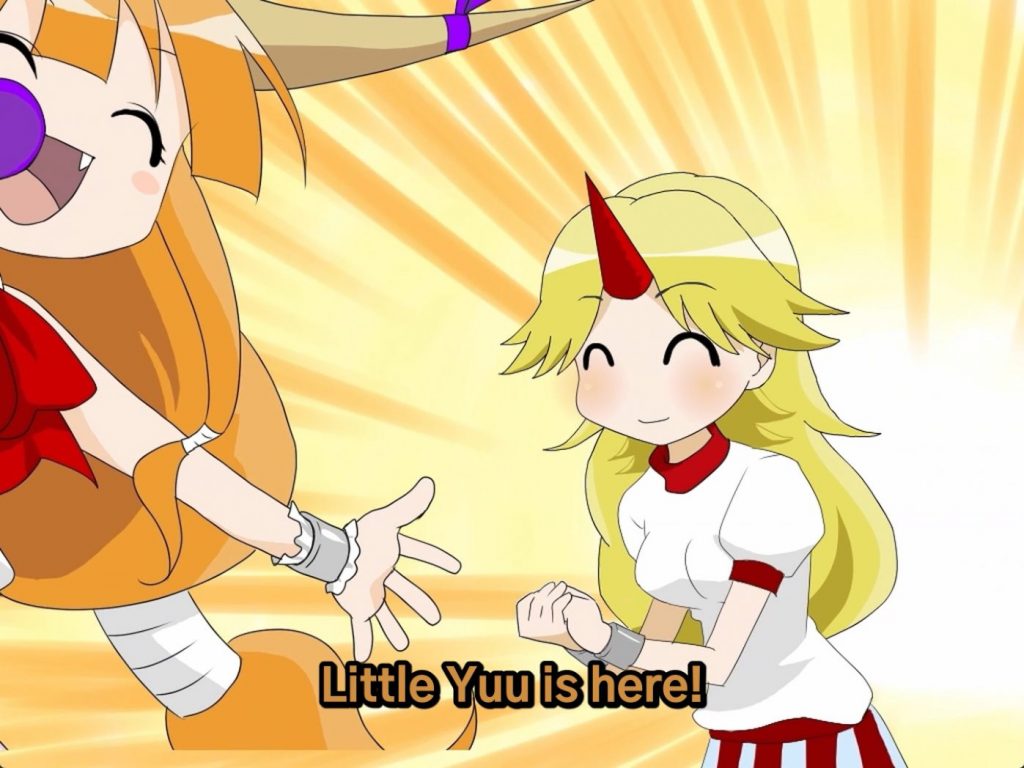
alonectorch : Yes, although it’s super hard to remember which ones were mine. I don’t have an encyclopedic knowledge of the series like Hou does, so I basically just know there are some jokes I came up with, but not which ones. There is one I think about a lot though, and that’s ‘Little Yuu’. There’s a manzai in the fourth Touhou M-1 where Yuugi wants Suika to do a boxing walk-up speech for her. In that manzai, there’s a recurring joke of Suika calling her Yuu-chan. Originally, this was just translated as ‘Yuugi’ or ‘Yuu’, since we remove honorifics. That kind of removes the joke of Yuu-chan making her sound small and unintimidating, though, so I suggested ‘Little Yuu.’ Not only do I think that’s hilarious in a vacuum, but it also ended up recurring quite a bit more over the course of the series. It’s featured and translated that same way in several manzai, so it ended up making me quite happy.
Hou : For me personally, the single hardest part of translating the series is conveying context that isn’t directly stated in the dialogue. In fact, that single hurdle is kind of the epitome of subtitling the series and it’s the battle I’m always fighting. See, this may sound obvious, but for a joke to be funny, the person hearing the joke has to understand the context, or the joke doesn’t land. So often in the series, a joke will expect viewers to be familiar with something that isn’t stated in the video–a joke, a location, a commercial, a person, a quote, a term, anything.
The difficulty comes from having to convey that information naturally in the dialogue so that the joke works. It may not be obvious, but this kind of “Oh, how do I convey this unstated information?” is probably the thing I spend the most time thinking about while translating and I think I’ve gotten better at it over time, but if you look really closely at the subtitles, you might spot this happening occasionally.
For example, there’s a skit in the 19th Touhou M-1 that is parodying a Japanese day-in-the-life documentary TV program. Yuuma says that she meets the qualifications to be offered a spot, hums the theme song of the TV program, and uses that as her justification. An English-speaking viewer can’t be expected to know the theme song, so I actually tweaked her subtitle line a little bit to clarify that she just hummed the theme song for the TV program.
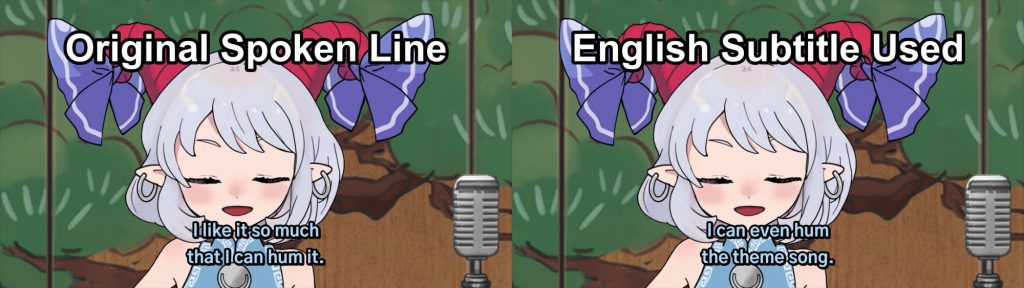
Little things like this happen so often that I actually wouldn’t be able to list them all
If you wanna experience it for yourself, here’s a little exercise you can try. Imagine a skit where someone is using a whiteboard to give a presentation. It’s a completely normal presentation, and then out of nowhere, they suddenly write “THE GAME” on it and say “By the way, you just lost the game.” Someone listening to the presentation then yells, “Dammit, I hate you!”
Let’s say you had to “translate” that for a new audience who doesn’t know what “the game” is. How would you approach it? Would you replace “you just lost the game” with another line? Would you change what the person yells in reaction to it? Would you try to insert a modified setup earlier in the presentation? Would you leave it completely as-is and just have the joke fly over the audience’s head? How would you try to convey the writer’s intent to the new audience? Translating Touhou M-1 is like going through this process over and over for a 70 minute video, and I personally find it very rewarding to see each translated manzai come together. It feels a lot like solving a puzzle, just with a deadline.
As for the actual hardest skits, it’s always the ones that involve dialect or intonation/pronunciation jokes because those are the most extreme versions of “Joke that won’t get across to an English speaker.” The most notable example, and one that alonectorch touched on earlier, is Seiran in the 10th. The “Earthling Dialect” manzai was probably the most complicated one to subtitle to date, requiring the most rewrites and the most input from other people. In fact, “Earthling Dialect” itself is a term unique to the English subtitles. It’s a replacement for the Japanese “standard dialect,” which English doesn’t really have an equivalent to.
From my perspective, a huge difficulty of translating that manzai comes from all of the different Japanese dialects having their own regional stereotypes that are very different from English ones. Making that entire sketch work in English while keeping the meaning and feeling of their lines intact was basically a fight against the language barrier itself, but I think we emerged victorious.
-And when folding that information into the dialogue isn’t possible, that’s when you have to resort to TL notes?
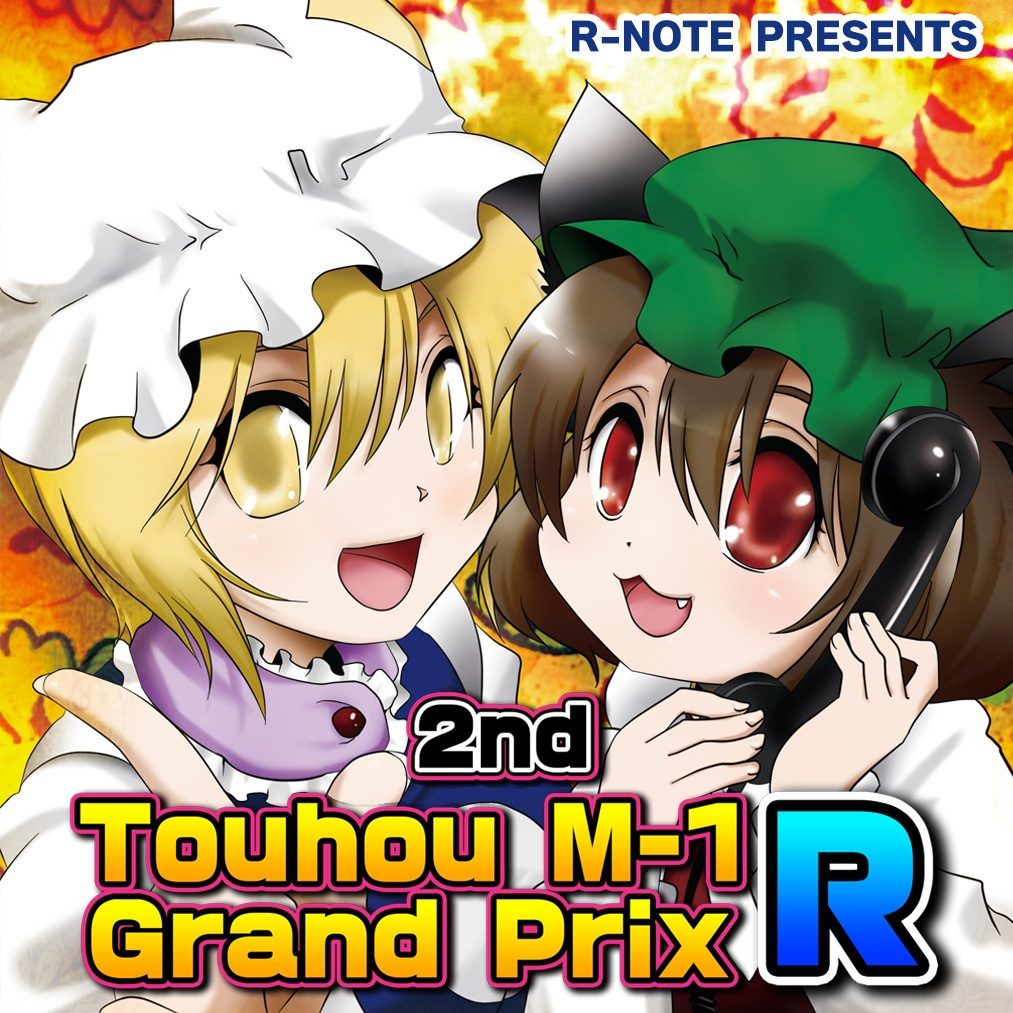
Hou : Yeah, I try to avoid them when possible, but sometimes there’s just no other way. There’s this part in the 17th where Mike imitates a sound found in Japanese McDonalds. There is just no way to cleanly explain this to English speakers, so I just blatantly note what’s happening.
-It seems that quite a bit of the challenge comes from the heavy references to Japanese pop-culture, how often do you end up having to look up a reference to get an idea on how to translate a joke?
Hou : Oh, that’s probably what I’m doing a third of the time. Not only does it reference Japanese pop culture, there are also lots of jokes in every video that aren’t pop culture, but are instead just an obscure joke that the writers personally find funny.
For example, the boombox at the end of the Patchuppa the Rapper sketch is quoting a character from The Classroom of Terror, a 1976 Japanese film that never released in English in any capacity. The joke is so obscure that most Japanese-speaking viewers don’t get the reference. The reference itself isn’t important, but the reason I researched it is because I wanted to make sure that the quote that the boombox is saying mimics what it would’ve maybe said in an English subtitled version of that movie. In a way, I actually subtitled a tiny part of The Classroom of Terror just for a joke in Touhou M-1.
But something that might be surprising to hear is that I spend substantially more time researching things in English than in Japanese when translating the videos. I only have to research Japanese stuff if I don’t get a joke. But since my goal is ultimately to deliver the intended viewing experience to English speakers, it’s essentially my job to replicate the Japanese jokes in English. Sometimes it can take hours of research and brainstorming to come up with a solution for a single joke.
alonectorch : You’ve also told me that you don’t always even know what’s a reference in the first place, right? Do you still worry about missing references these days?
Hou : Interesting question. Nowadays, I actually worry about that less than I used to. To be honest, after spending multiple years translating dialogue written by the same writer, listening to the producer commentaries, and occasionally even directly asking about certain lines, I think I’ve developed an intuition for if a line is a reference or not. A lot of bits and pieces of manzai throughout the series are also inspired by various things in media, but I don’t think an inspiration is the same as a reference that’s meant to be understood, so I don’t really worry about those. But when a line is very clearly referencing or parodying something, I don’t always know what that reference is and sometimes I can’t figure it out for the life of me. I actually don’t know what commercial is being parodied in YuuTen Paradise’s manzai, but it still flows perfectly fine without that knowledge since Yuuka herself is also confused, so I wouldn’t have changed the translation even if I did know. That would actually make it more awkward.

But the reality is that I almost certainly miss some references here and there, since sometimes they’re super subtle. Real manzai and comedy performers also get referenced a good amount in the series, and sometimes it’s hard to catch those, especially if they’re newer lines that aren’t easy to search for online. But I always try to be on the lookout for them.
-Aside from Japanese pop culture, Touhou M-1 Grand Prix also delves heavily into Touhou canon and fanon. How does that affect translation?
Hou : Honestly, this is a bit of a tangent, but it’s part of what I like about Touhou M-1. On the surface, it may seem like it just turns every character into jokes or memes, but in reality, a lot of care is actually put into preserving the setting and characters (maybe excluding the Yakumo family dynamic in the earlier ones). A lot of the characters’ exaggerated traits in Touhou M-1 are written from the perspective of “How might this Touhou character behave while performing comedy?”
Reimu and Marisa tend to joke about down-to-earth and occasionally perhaps even relatable scenarios.
Rumia doesn’t really understand the conventions of manzai, so Wriggle has a hard time keeping up with her.
Seiga has an edgy sense of humor and enjoys tormenting Kasen with unexpected ad-libbing.
Futo has a hard time reading the room, speaking at inappropriate times and talking over Tojiko and even the hosts.
Hina is kind and doesn’t get angry easily, so Nitori uses her as an opportunity to test her gadgets.
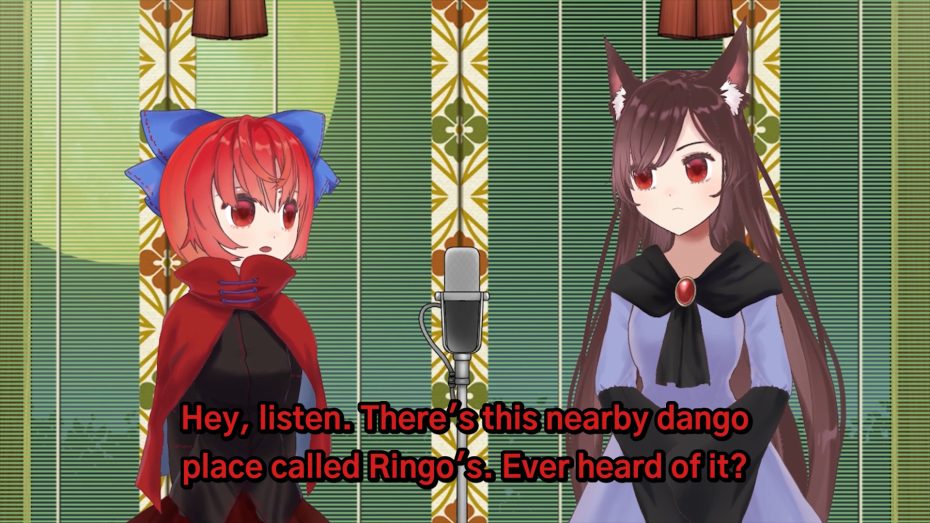
There’s actually a lot of effort put into keeping Touhou canon in mind and I commend the writers for that. For an example of smaller details, a bit of dialogue in EX4 actually references “Ringo-ya (translated as Ringo’s)” which is the name of Ringo’s dango stand from Alternative Facts in Eastern Utopia. That’s a crazy attention to detail that I don’t think most people would even recognize.
From a translation perspective, honestly the worst term to ever have to write in the subtitles is “Palace of the Earth Spirits” and I honestly go out of my way to avoid writing it as much as possible. That building name takes up basically an entire subtitle line and there isn’t an established abbreviation like with SDM. So I’ll do things like shorten it to “the Palace” or just refer to it indirectly depending on the context.
-Subtitle space is a massive limitation that you have to work around, eh?
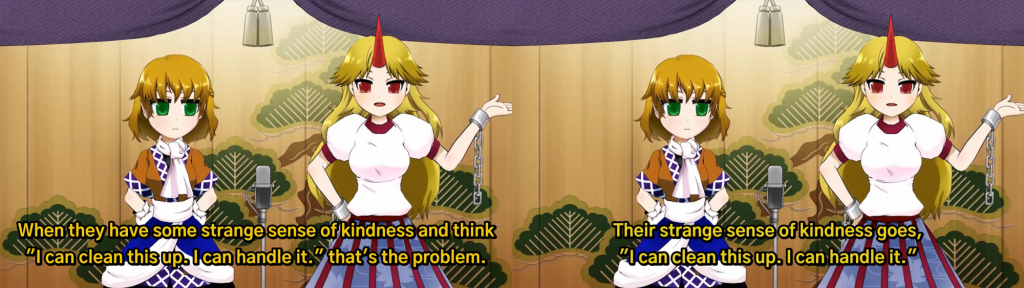
Hou : It’s basically the limitation. That and the speed of them. And that also ties back into having to convey context to the viewer. Subtitles can only stay on the screen for so long before the next line is spoken, so every line tends to be jam-packed with as much info as possible to make use of the limited space. With manga, you have to stay within the bubble margins. With a game, you have to stay within the text box. That’s not to discredit those who work on those–they come with their own challenges. But with video subtitles, you not only have to stay within TV safe margins, but you also have to ensure that the subtitles are on-screen long enough to be read. If the subtitles are too long, then they have to be shortened while still conveying the same information.
alonectorch : Do you also have those moments where you’re agonizing over how to translate something, and then you realize you don’t have enough subtitle space to do it, or is that just me?
Hou : Well, I’m manually typing out every single line that ends up in the subtitles, so I wouldn’t really call it a realization. It’s something that I’m constantly aware of. Since I can see the speed and length of a line on the screen as I type it out, I can very quickly tell if something is too long. But I did have to reword or trim a lot of lines in preparation for selling the series on platforms other than YouTube.
Manzai in general are known for having very fast-paced line delivery, with people regularly cutting each other off, and Touhou M-1 is no exception. On top of that, it generally takes less words to convey information in Japanese than it does in English. When you combine these things, it makes it a real challenge to convey a line in English without having to omit part of it. I think this is part of what makes translating for Touhou M-1 rather unique in the world of Touhou translations.
-With all those challenges to deal with, which skit/joke translation are you most proud of?
Hou : That’s surprisingly hard to answer because a lot of the things I’m proud of are very small things that don’t stand out at all. It’s not the puns or anything like that, but rather, the parts that can’t be seen. I have a small background in video editing, and I think as both a translator and video editor, the best work I can do is work that is invisible to the viewer. Essentially, if I can manage to create a seamless experience in which you barely even notice you’re reading the subtitles, that is what I would be proud of.
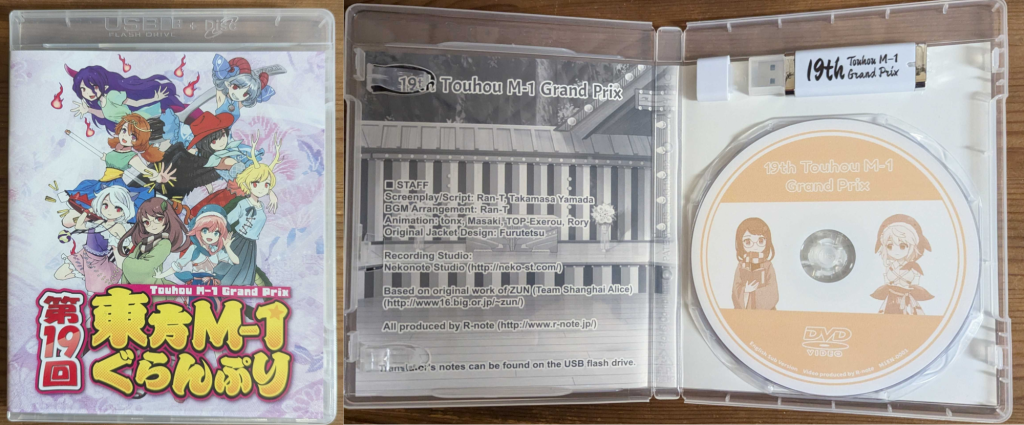
There was also a screening of the 19th Touhou M-1 at TouhouFest 2025, and it was so heart-warming and encouraging to be able to witness a live audience reaction to the video. We even sold physical English copies and the reception was very positive! It really makes me feel like I’ve come a long way from being a volunteer clip subtitler and I’m thrilled that I’ve been able to help Touhou M-1 reach an English-speaking audience. So honestly, because of that experience, I would say that the entirety of the 19th Touhou M-1 is the one I’m the most proud of.
Having said that, if you want a single bit that you can easily watch for free on YouTube, then I’m very happy with how Seiga’s “buzz buzz” joke in 12 and EX5 turned out.
Interview with Touhou M-1 Grand Prix Translation Team Part 1 End